

Seagate has announced financial results for the first quarter of FY2024. Revenue is down 29% compared with the first quarter of FY2023, while the company reported a loss of $129 million. With HAMR on the cusp of widespread rollout, will the new technology be enough to recover the business?
Background
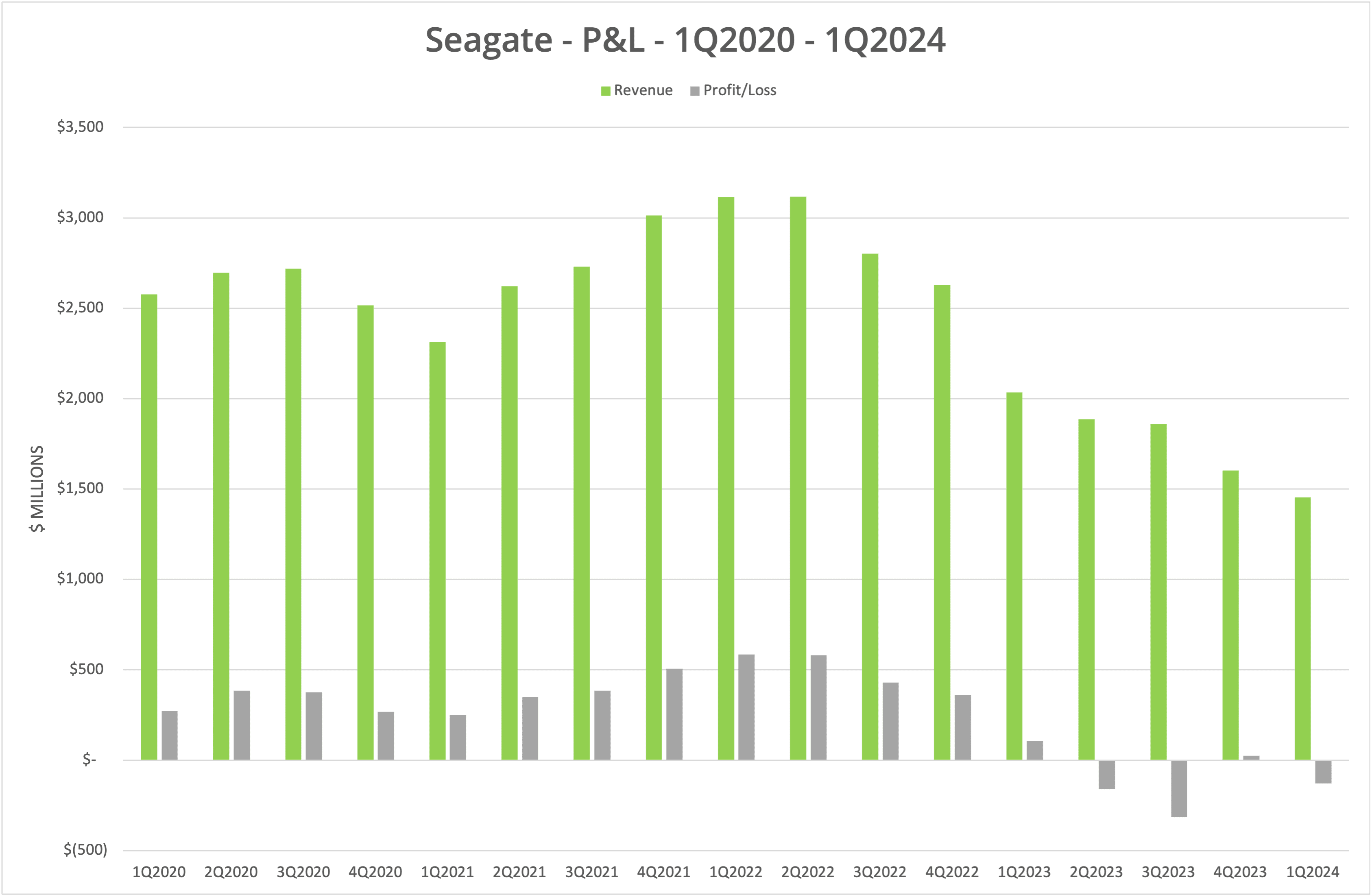
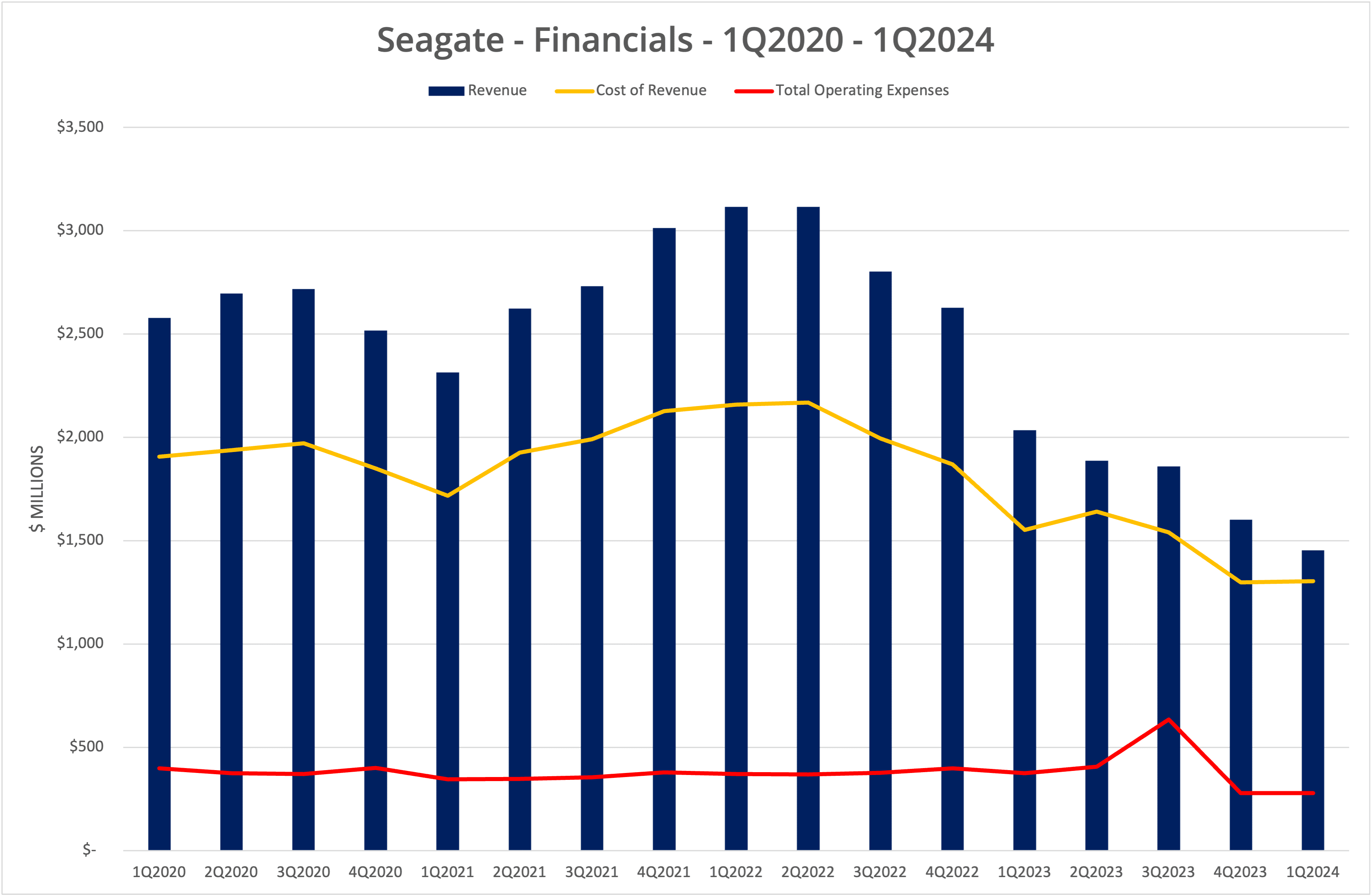
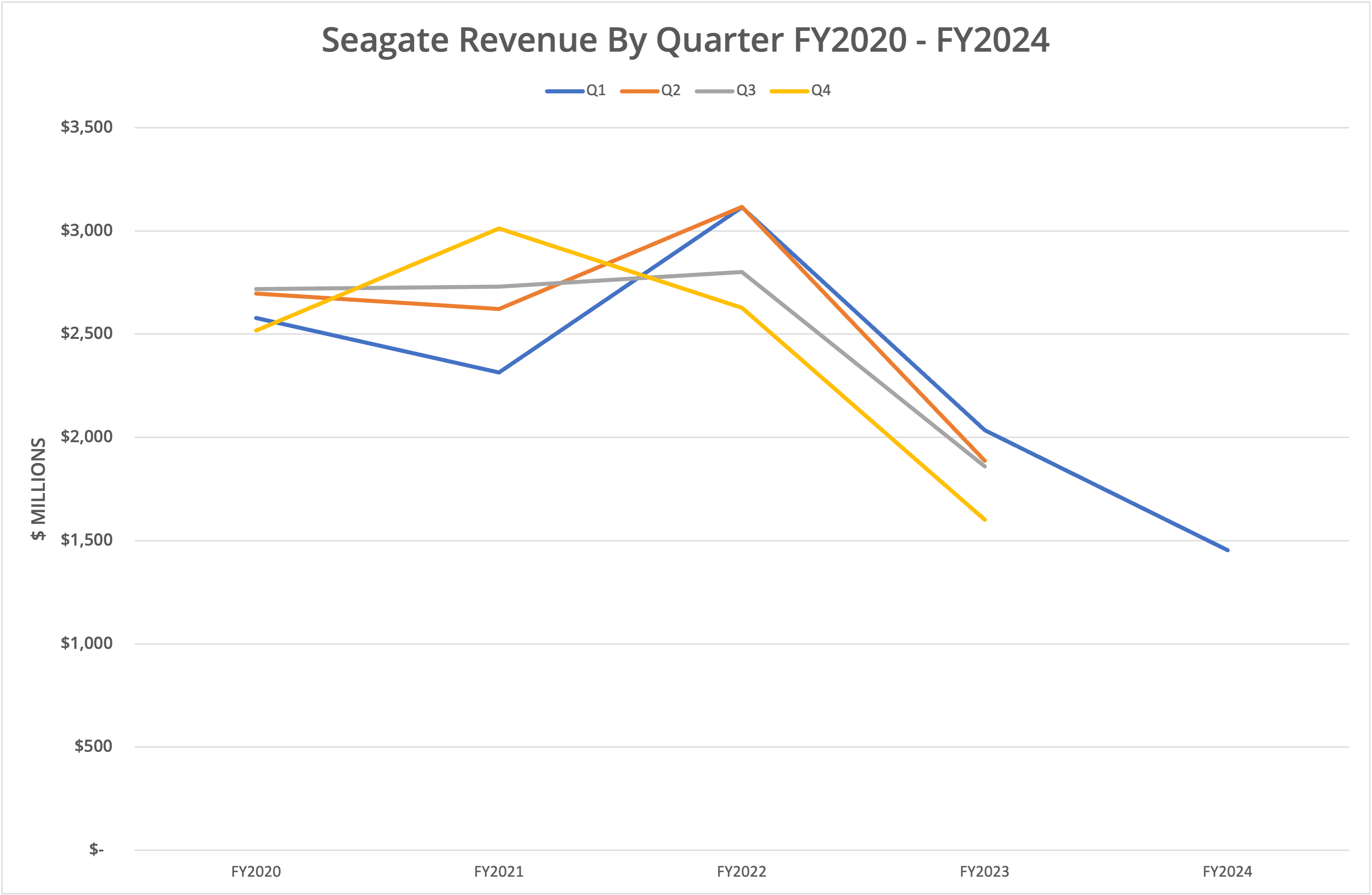
Seagate reported first-quarter financial figures for FY2024 at the end of October 2023. As shown in Figures 1, 2 and 3, revenue continues to decline for the fifth quarter in a row compared to the same period a year previously. Gross margin was down (10% compared to 24% in Q1 FY2023), resulting in a loss of $129 million.
HAMR
The storage business is cyclical, with peaks and troughs dictated by the market, increasingly meaning hyper-scalers and public cloud vendors when referring to hard drives. Seagate is particularly dependent on the HDD market, with over 90% of revenue derived from hard disk drive sales.
In supplemental data provided with the financials press release, Seagate highlighted HAMR drives with 3+TB per platter should see volume ramp up in calendar year 2024. HAMR 4+TB platter drives are expected within two years. With 10 platters per drive, this gives us potentially 30TB+ and 40TB+ markers against which we can align growth.
The Architect’s View®
Seagate will point to an extended cyclical downturn with potential for growth as the hyper-scale market starts to re-purchase drives. We agree that there will be an uptick in demand at some point in the future. However, the latest data from AWS, Azure and Google Cloud indicates slowing growth as customers look to optimise operational spending on infrastructure. We see multiple micro-challenges for future HDD growth.
- Businesses are optimising spending on infrastructure, which is exacerbated by the operational nature of costs in the public cloud.
- “SANs in the Cloud” enable better use of flash media in public cloud vendors, making the overall cost of flash more competitive compared to HDD.
- SSD media has already overtaken HDD in terms of maximum capacity and will quickly overtake it in terms of average (Seagate’s average capacity per drive shipped is 7.5TB).
- The TCO of flash is close to, or better than, hard drives for active data.
- Businesses will start looking at sustainability and whether data can be deleted (or better archived to tape) as part of better environmental practices.
All of these small changes point to a future where disk drives become increasingly niche. Despite talk of green shoots, we don’t believe a significant upturn in revenue is due anytime soon.

X-Ray: Seagate Technology PLC
This Architecting IT report takes a deep dive into Seagate’s history, products, services, and future outlook. This report is only available for download via paid subscription.
Related Posts
- Seagate Announces Q4 FY2023 and Full Year Results
- Seagate Pre-announces Multi-Actuator Drives
- Seagate Ups The Ante with 60TB SSD
- Revisiting Seagate Kinetic Drives
Copyright (c) 2007-2023 – Post #93dd – Brookend Limited, first published on https://www.architecting.it/blog, do not reproduce without permission.