

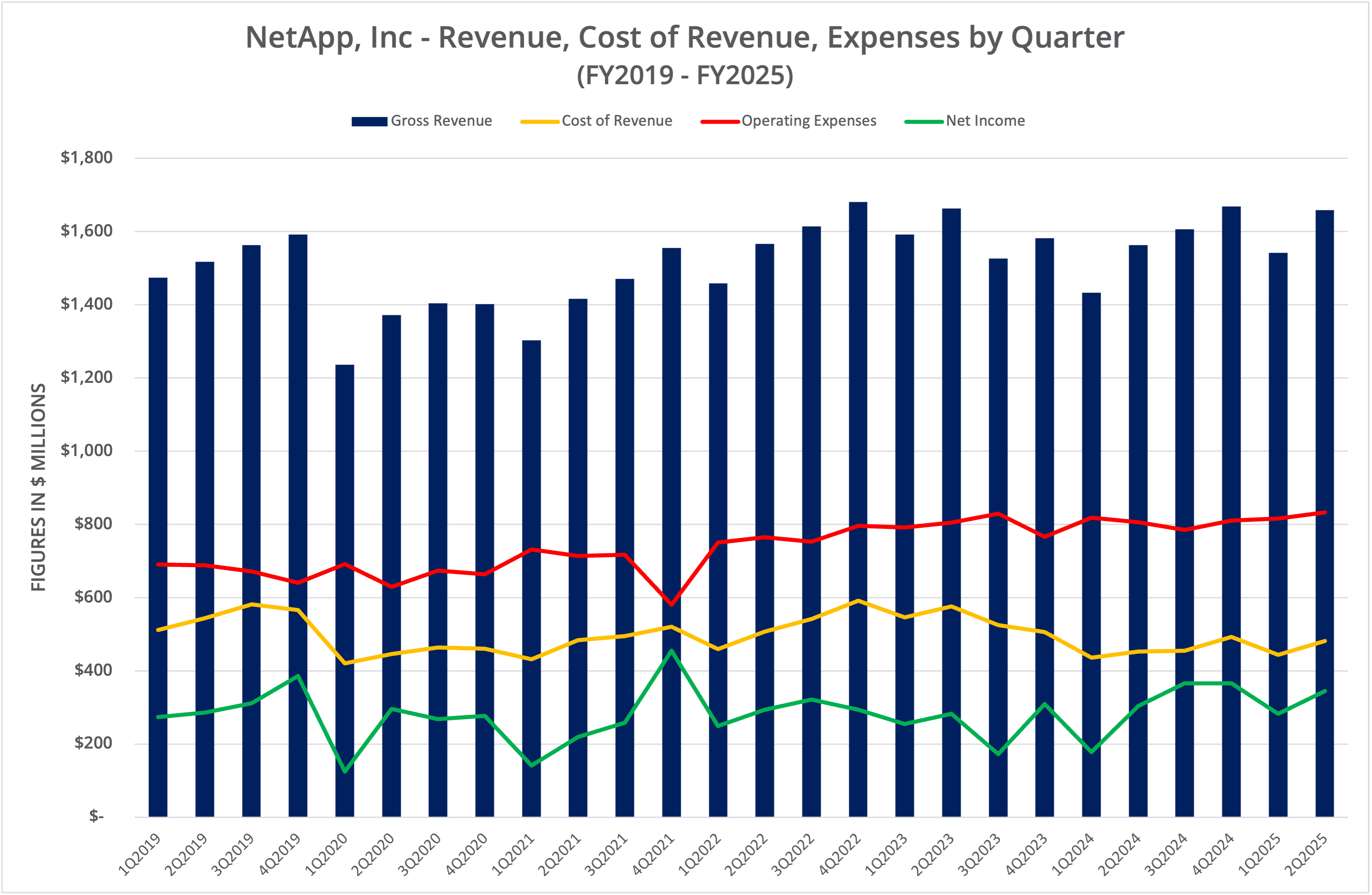
NetApp, Inc. has announced financial results for the second quarter of financial year 2025, ending 25 October 2024. Revenue rose 6.1% to $1.66 billion, compared to Q2 FY2024, while all-flash ARR was up 19%. The Public Cloud segment also returned to growth, up 9.1% year-on-year. Momentum continues to be positive for the data and storage company; can we expect it to continue?
Background
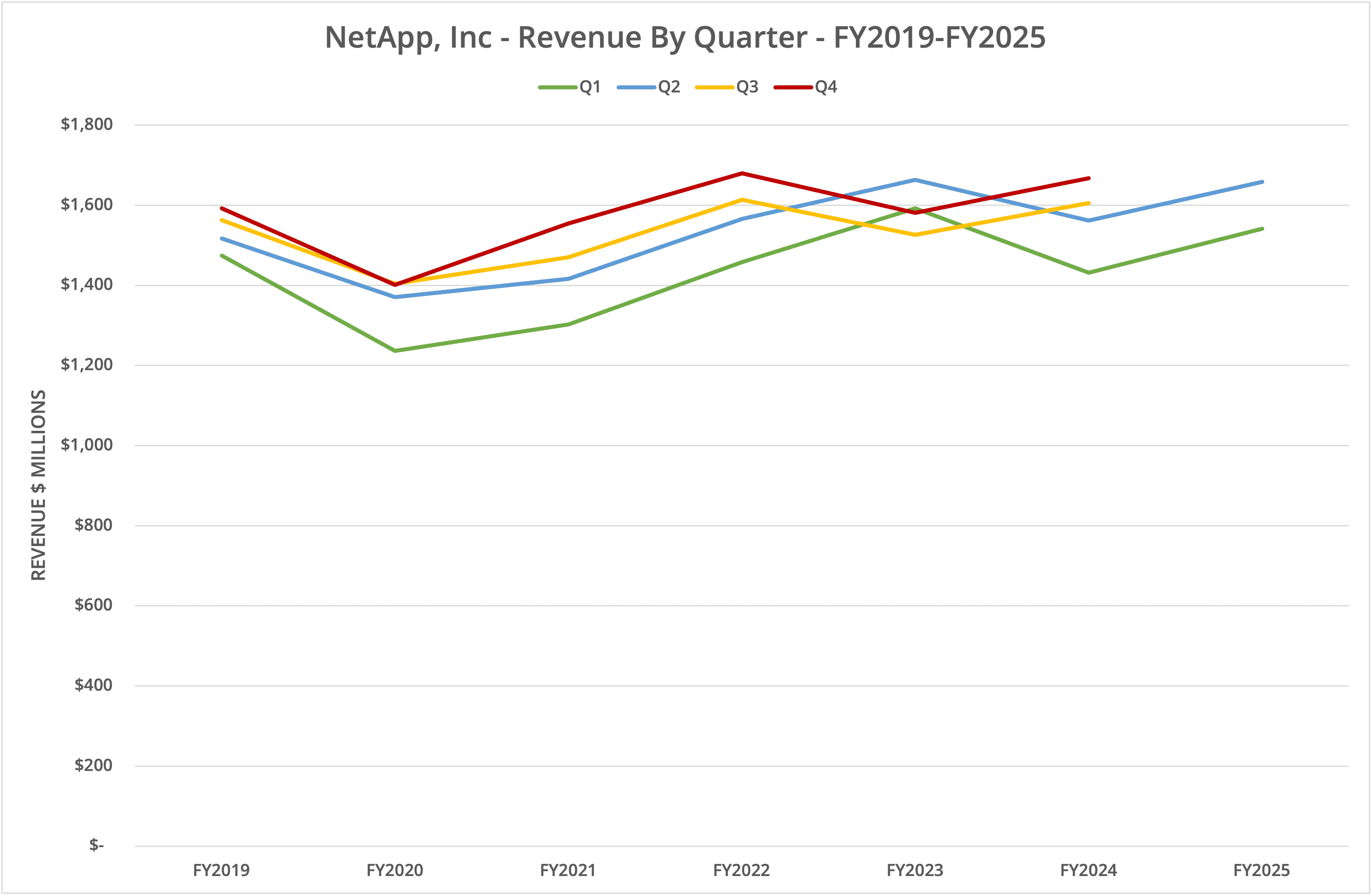
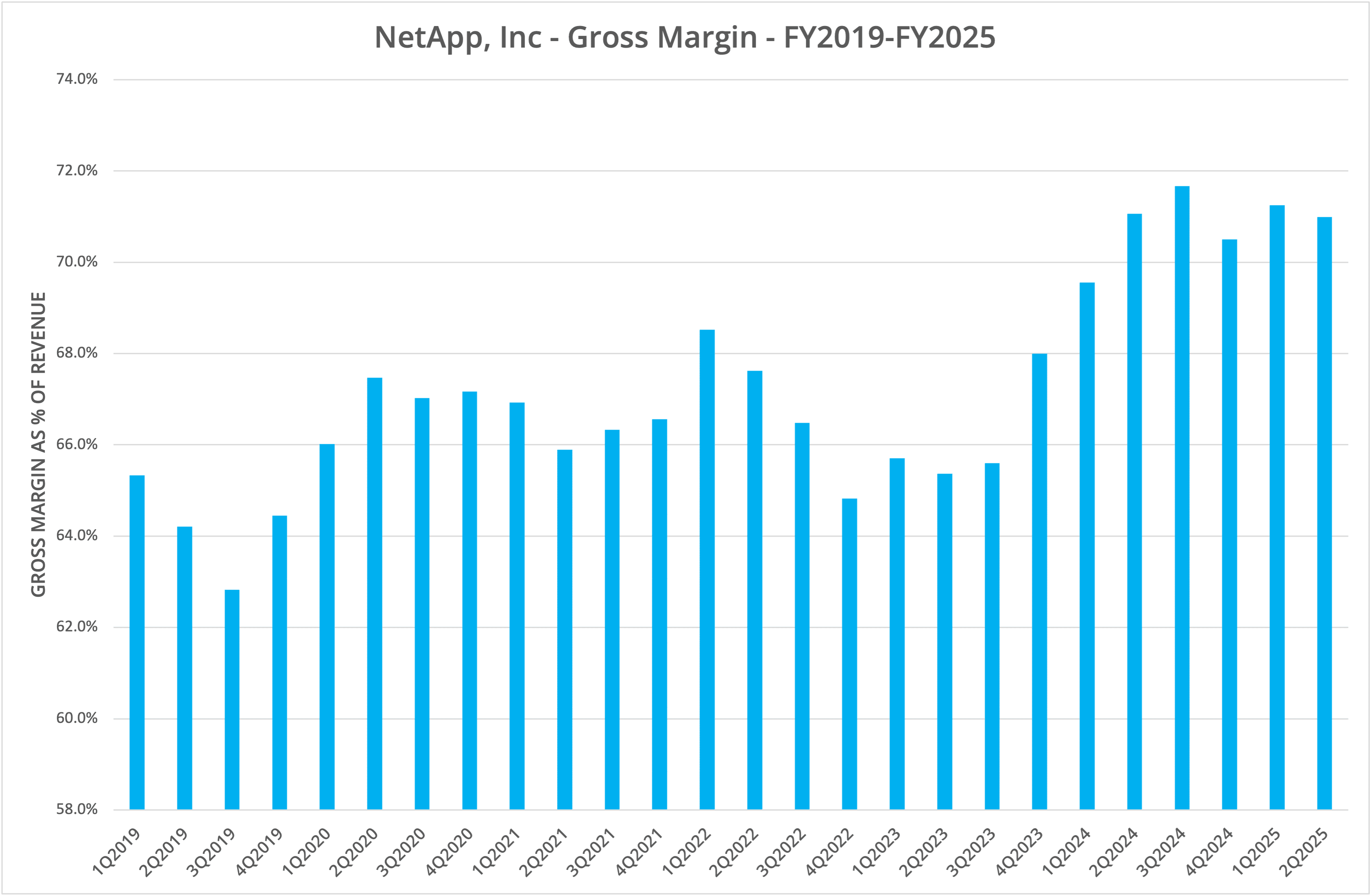
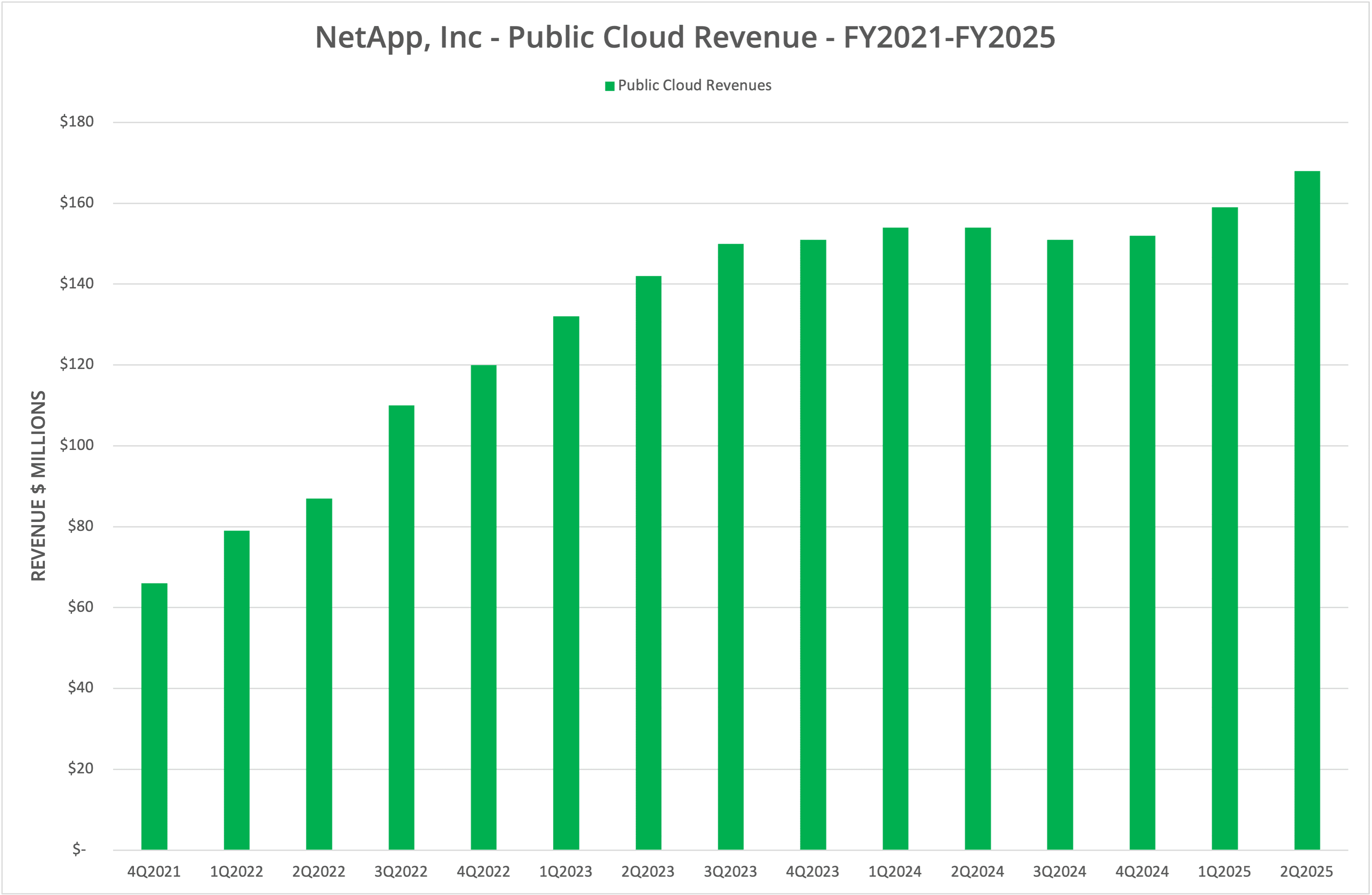
NetApp, Inc. has declared financial results for Q2 FY2025. Revenue for the period was $1.66 billion, up 6.1% on the same period in FY2024 and 7.6% sequentially. Public Cloud revenue was $168 million for the quarter, up 9.1% on the same period in FY2024 and representing a return to growth after several stagnant quarters. We present the data in 4 graphs, shown in Figures 1 to 4.
All-Flash
Once again, all-flash systems were a driver of growth, with revenue for the period of $950 million, or approximately 2/3 of the total hybrid cloud segment. In recent years, NetApp has been successful in transforming its hardware business towards the all-flash market, in part due to the release of the latest C-Series systems, as well as frequent refreshes and updates. The company also expanded its market TAM, introducing the ASA, a “SAN-only” platform for customers that don’t need or want multi-protocol hardware.
The most recent updates to AFF systems were announced on 11 November 2024, expanding the portfolio with the AFF A20, A30 and A50 systems, 2U platforms with 24 embedded SSDs. The C-Series range was also updated.
Public Cloud
Elsewhere, the public cloud segment saw a return to growth, delivering $168 million in the quarter, an increase of 9.1% on the same period in FY2024. Figure 4 shows the trend in public cloud revenue from Q4 FY2021 onwards. We can see that between Q3 FY2023 and Q3 FY2024, the business stagnated, but in recent quarters has delivered increasing revenue.
We believe this improvement in the public cloud segment is due to the restructuring of the public cloud offerings, the introduction of new solutions such as the BlueXP Workload Factory and a greater focus on integration between what was a disparate set of products and solutions.
IDI
NetApp now describes its business as “Intelligent Data Infrastructure”, comprising three components.
- Unified Storage – the hardware storage products, Keystone storage-as-a-service and public cloud offerings.
- Intelligent Services – enhancements to the storage platforms, delivered through ONTAP and a services portal that implements data and AI services, as well as workload services.
- Solutions – integrations and solutions developed with partners, such as those for AI.
The previously separate businesses that were part of the “Spot” family have been slowly transformed into “intelligent services”, divided into Data & AI Services and Infrastructure & Workload Services. This denomination makes it much clearer to see how these products offer value to customers. They also now act in a much more integrated manner rather than existing as a separate business (something we highlighted in this article).
The Architect’s View®
Over the last 24 months, NetApp has refocused the business on delivering a broader range of all-flash solutions to customers. This has included expansion into “capacity” flash products and a greater emphasis on SAN-only solutions. The result has been growth in the all-flash and hybrid cloud businesses, in which we expect to see continued improvement.
The return to growth in the public cloud business is a clear sign of a revamped strategy in that part of the organisation. We believe NetApp has further opportunities in this area, especially as the AI-related features, such as the AI Engine demonstrated at Insight, become more widely adopted by customers.
The Intelligent Data Infrastructure messaging provides a much clearer view of how NetApp has evolved the business, offering “value-add” to both on-premises and public cloud customers. The big question is whether this revenue improvement can be sustained.
One transition to look out for in 2025 is the introduction of NetApp’s new scale-out architecture. We can see this new platform becoming the consolidation of both the existing ONTAP product lines and the StorageGRID systems. Although we have no details yet, it seems logical that the existing ASA hardware remains as it is today while the scale-out solution targets unstructured data.
The new hardware platform could offer NetApp greater inroads into object storage in the on-premises data centre, an area that offers growth for the future, especially with the continued interest in AI.
Related Content
- Research Note: NetApp teases new disaggregated storage architecture for ONTAP at Insight 2024
- Research Note: NetApp introduces updated ASA A-Series hardware at Insight 2024
- Analysis: NetApp announces Q1 FY2025 financial results
- Analysis: NetApp Announces Q4 FY2024 and Full Year Results
Copyright (c) 2007-2024 – Post #efb4 – Brookend Limited, first published on https://www.architecting.it/blog, do not reproduce without permission.