

Arm Holdings PLC has announced Q1 FY2025 financial data, with record revenue for the quarter. Year-on-Year, revenue rose 39% to $939 million, with Licencing revenue up 72% and Royalty revenue increasing by 17%. As the company moves to drop device tracking metrics, what does this highlight for the future of Arm in the data centre?
Background
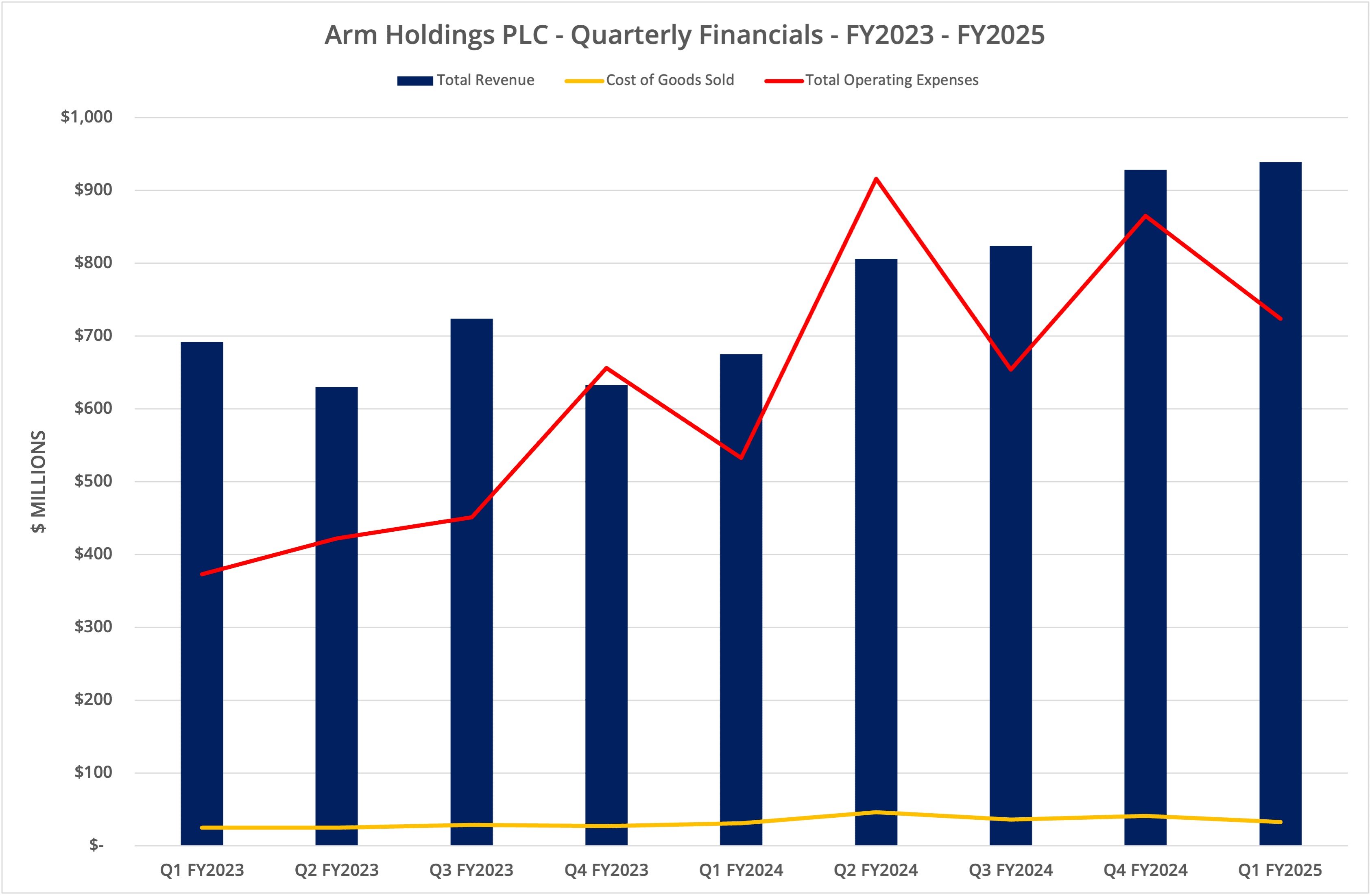
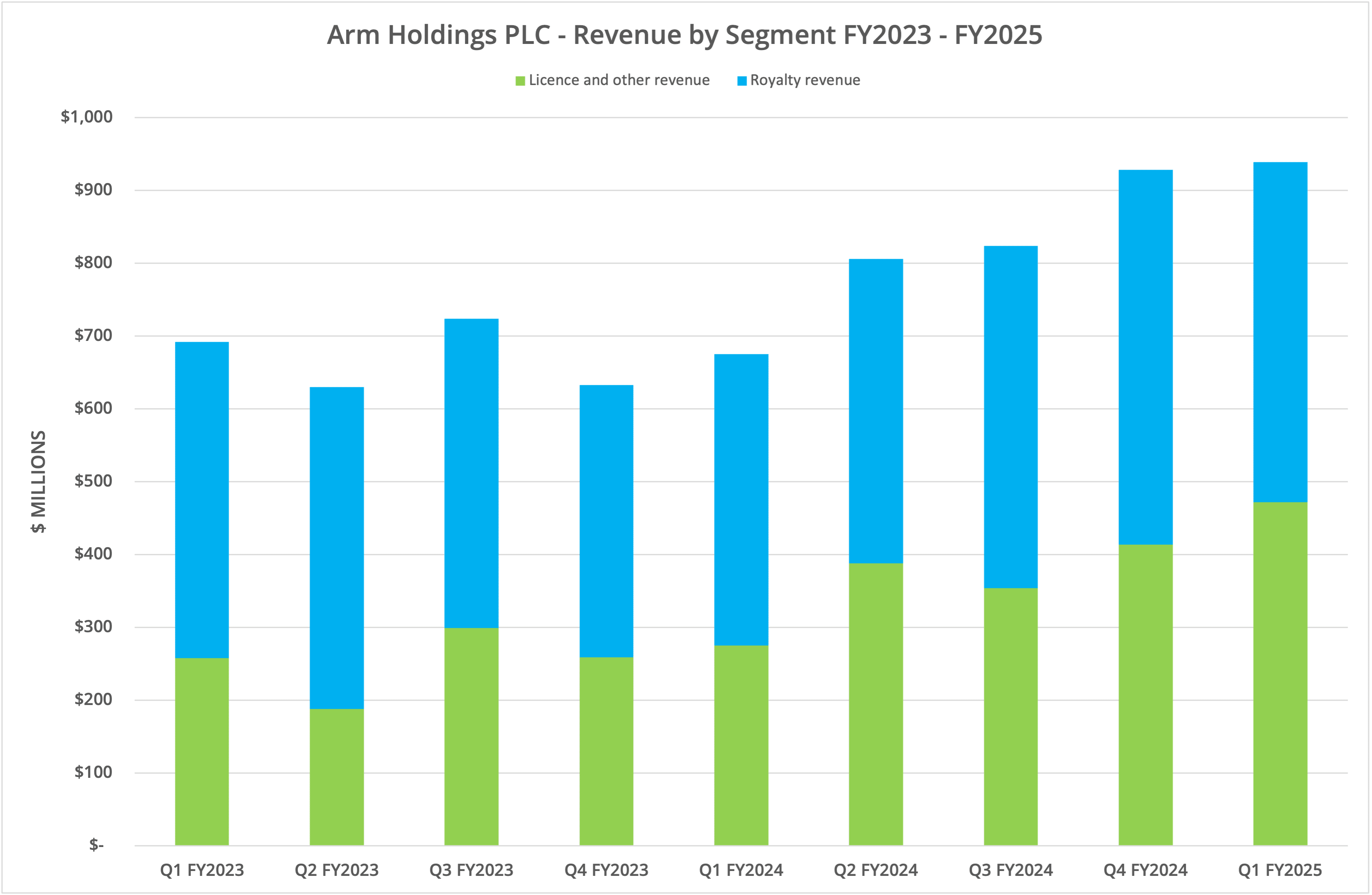
Arm Holdings PLC reported financial data for Q1 FY2025 (the period ending 30 June 2025) on 30July 2025. Revenue rose 39% year-on-year to $939 million compared to Q1 FY2024 and approximately 1% sequentially. Looking at the main revenue streams, Licensing and Other Revenue rose 72% due to new Arm Total Access licence agreements. Royalty revenue grew 17%.
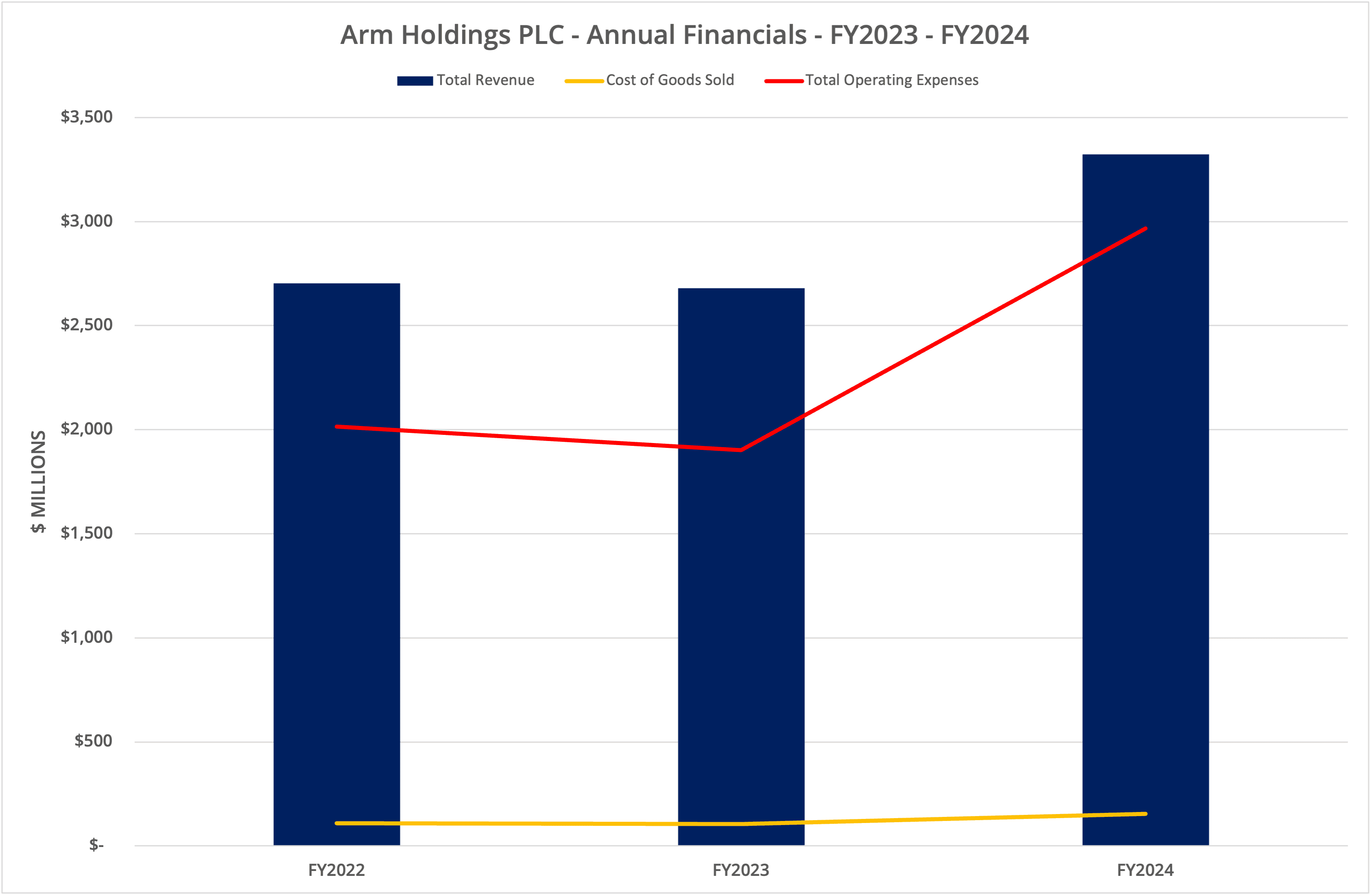
In a shareholder letter, the company attributed revenue growth to increased adoption of the Armv9 architecture (now 25% of royalty revenue, up from 20%), smartphone revenue (up 50% year-on-year) and the adoption of Arm in the public cloud.
We show the latest financial data across three graphs, labelled Figures 1 to 3.
Data Centre
Historically, Arm has been very successful in the mobile market, specifically with smartphones and tablet devices. In the last six months, we have also seen the announcement of laptops driven by the Arm architecture, as Qualcomm released products with partners based on the Snapdragon X processor.
As we have been highlighting for some time, Arm is encroaching into the data centre. This transition is driven by the public cloud, with Graviton from AWS, Axion from Google Cloud and Cobalt from Azure. Oracle Cloud also has Arm-based instances using Ampere processors, using technology licensed from Arm.
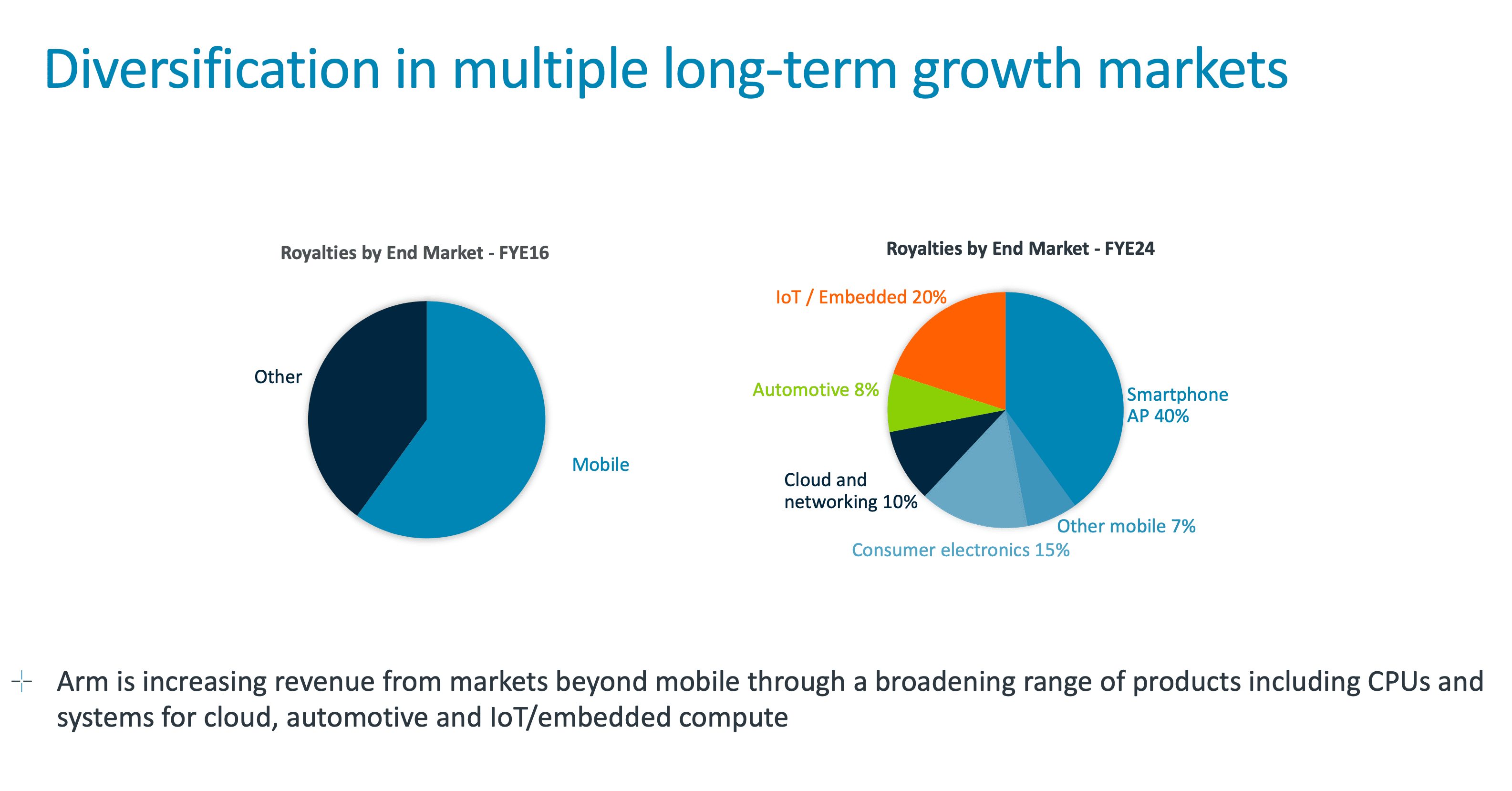
Figure 4, taken from the latest Arm shareholder presentation, shows how the business has diversified over the last decade. New business segments include Cloud & Networking and Consumer Electronics, with less dependency on the mobile segment.
Reporting
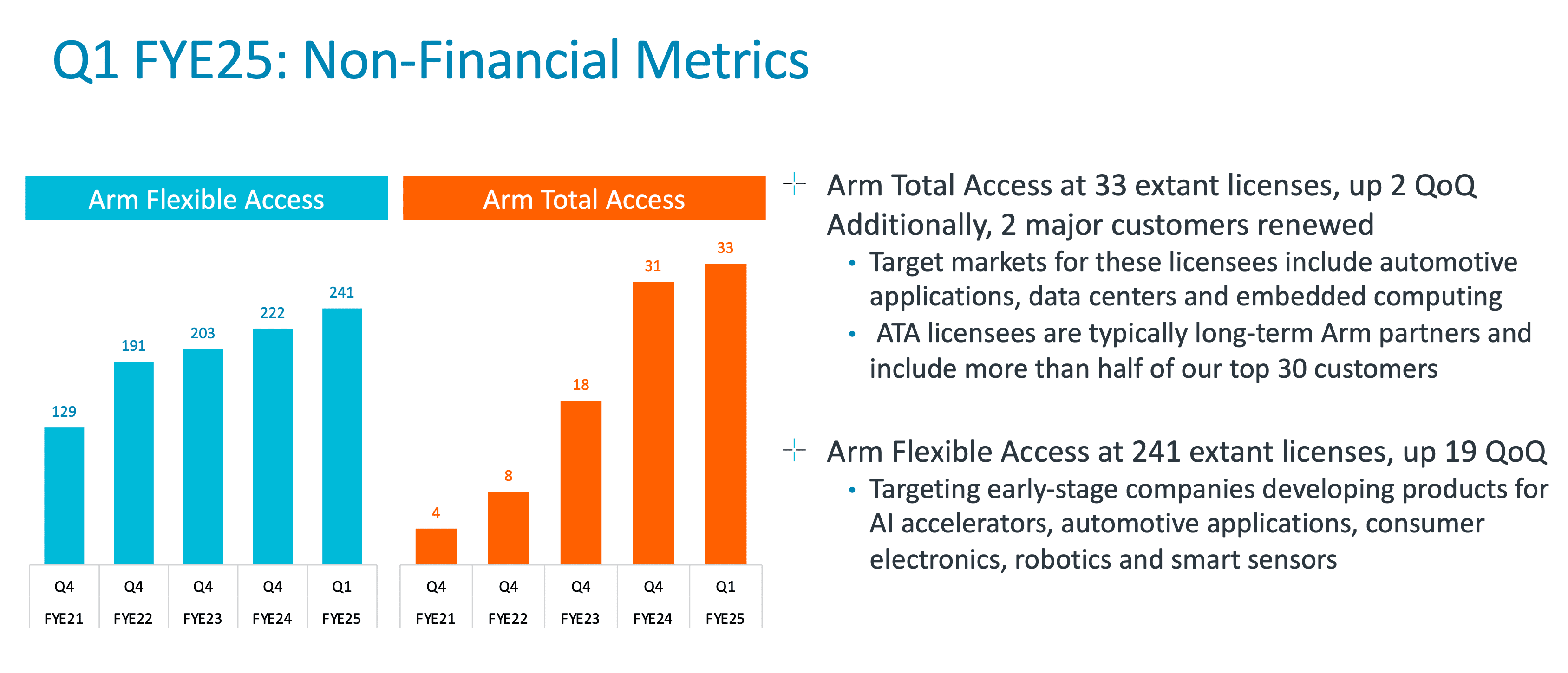
Arm sees its business moving away from mobile devices as the primary source of revenue to one with growth in Edge AI and enterprise solutions. As a result, the company will no longer report devices shipped (from Royalty revenue) as a measure of success. Instead, the metric of licences will be used – see Figure 5.
The Architect’s View®
Arm has reported positive growth figures, but it is the change in metric tracking that looks the most interesting news announced this quarter. Arm processors continue to push into the data centre via the public cloud, while Arm-based PCs have gained widespread development.
The company clearly expects the new revenue segments to drive future growth, and we agree with that premise. Arm offers greater efficiency over x86 in the data centre and on the desktop and is already a powerful solution when combined with GPUs in platforms such as the MacBook line of devices.
However, the private data centre still remains a challenge for Arm. To our knowledge (since the demise of Bamboo Systems), there are no leading server vendors shipping Arm-based solutions other than the use of Arm in SoftIron’s private cloud infrastructure.
The challenge is perhaps the difference in architecture between x86 and Arm. To date, x86 solutions have been shipped as systems with motherboard designs supporting peripheral and memory components whereas Arm has shipped with a system-on-chip design. This is because Arm licences intellectual property, rather than shipping product, so customers must do their own integration.
Another hurdle to achieve is the availability of applications. Microsoft has developed Windows for Arm, which includes native recompilations of core applications such as Microsoft Office. However, we don’t believe there is a Windows Server for Arm (yet). There are Linux distributions for Arm, including Arm-based implementations of standard applications (think databases), but we haven’t surveyed this market to see how complete the support is for applications and tools.
When a primary server vendor announces a shipping product, then we will see a significant inflection in the industry. Arm will continue to gain in market share, pushing AMD and Intel to either radically improve the x86 ISA or consider alternatives. This is a discussion for another day.
Copyright (c) 2007-2024 – Post #45e3 – Brookend Limited, first published on https://www.architecting.it/blog, do not reproduce without permission.