

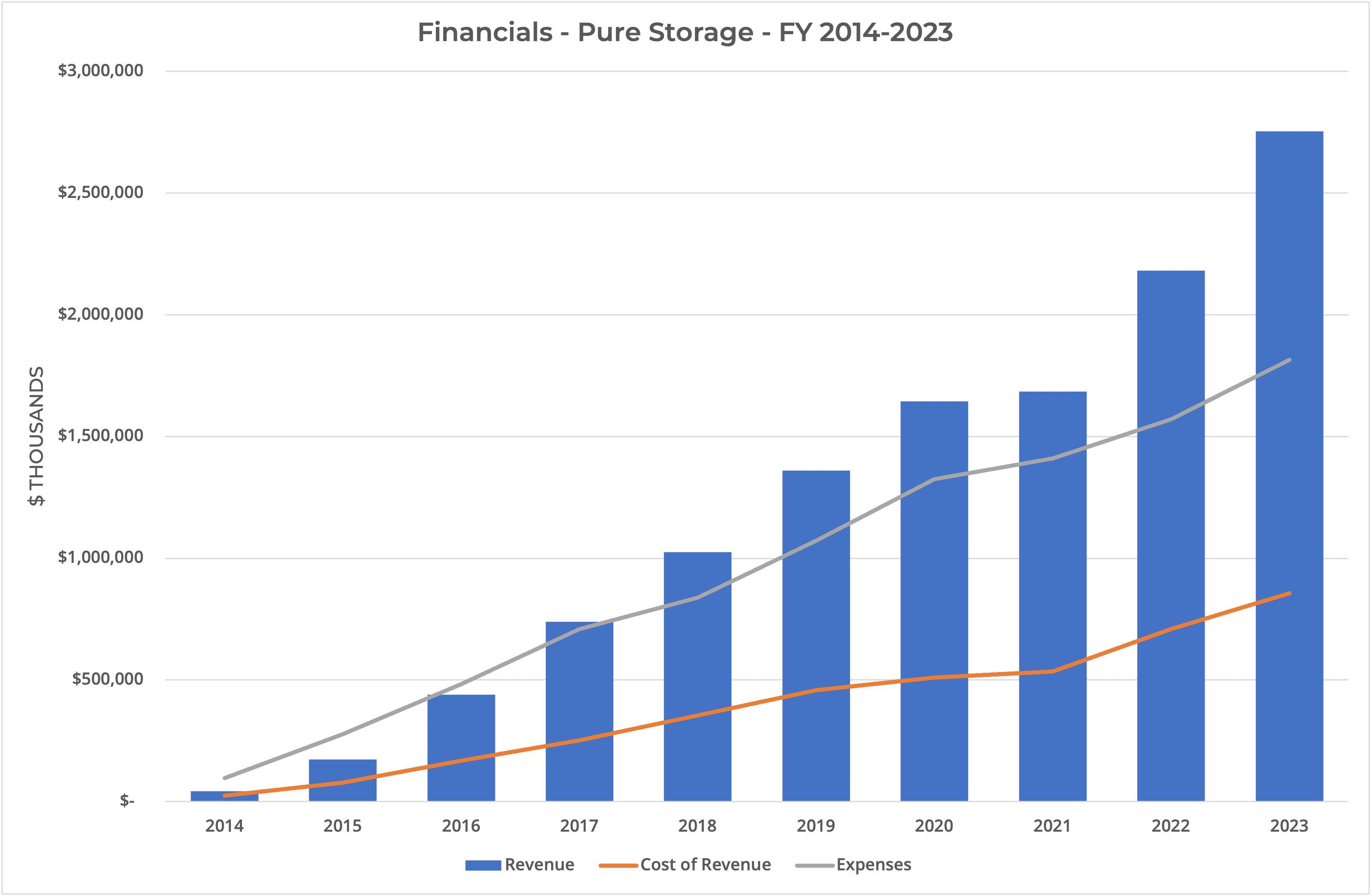
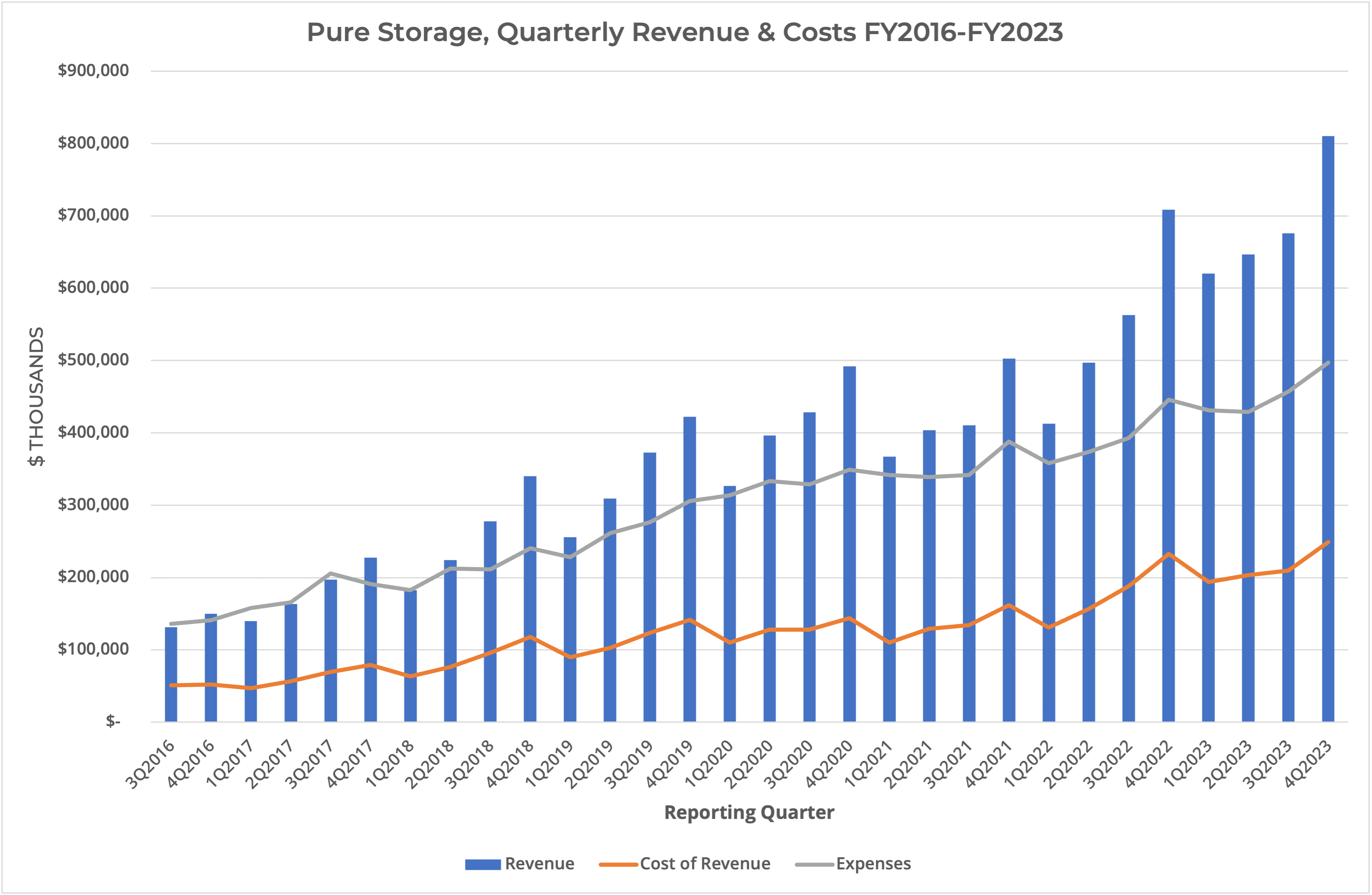
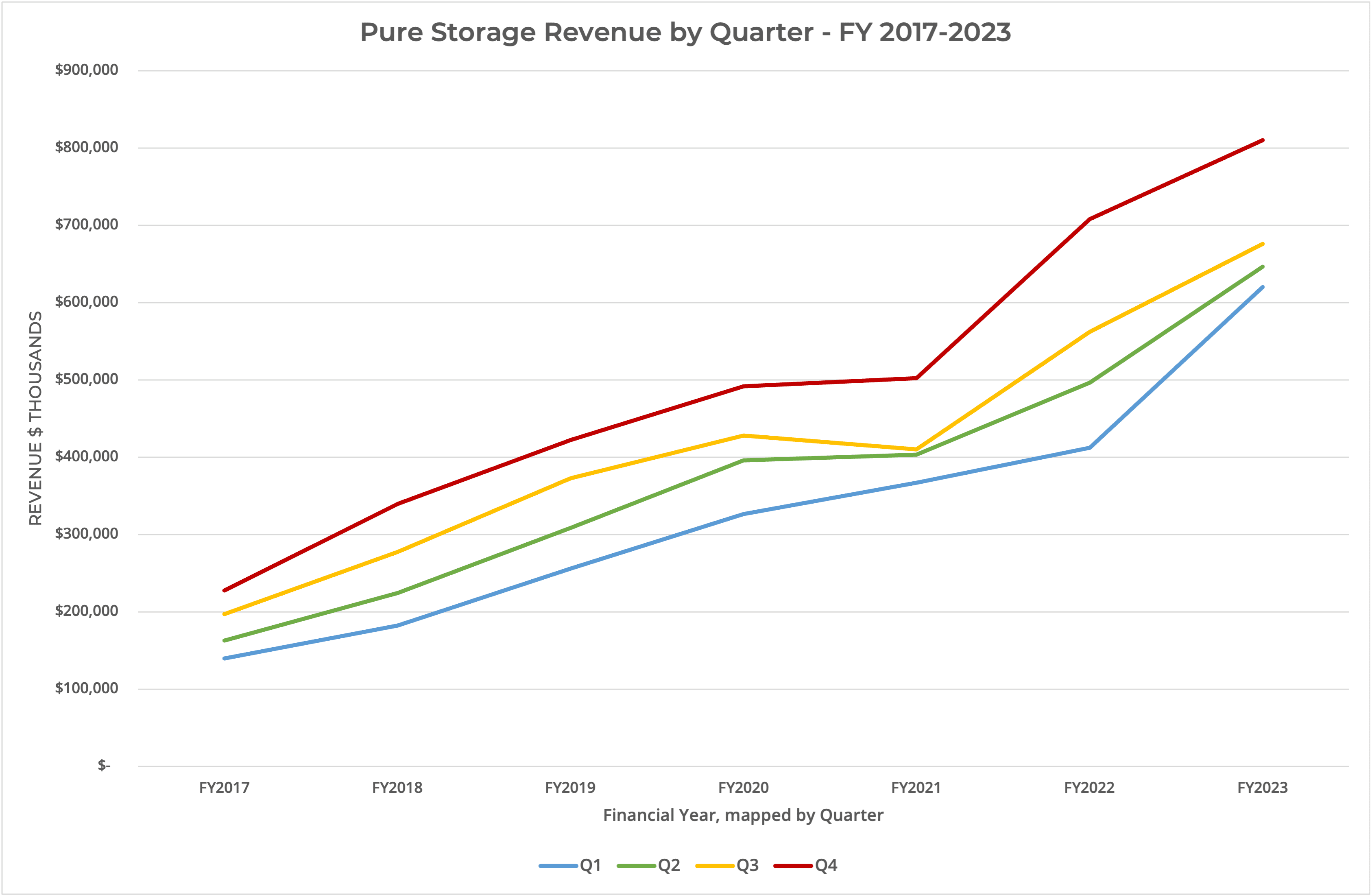
Pure Storage has announced Q4 revenue figures for the financial year 2023 that show 14% year-on-year growth for the quarter and 26% revenue growth for the whole year compared to 2022. How does Pure Storage continue to grow the business in an environment where others are falling behind?
Disclaimer: We do not offer financial advice or information. Data presented is freely available from public sources and collated purely for discussion purposes.
Background
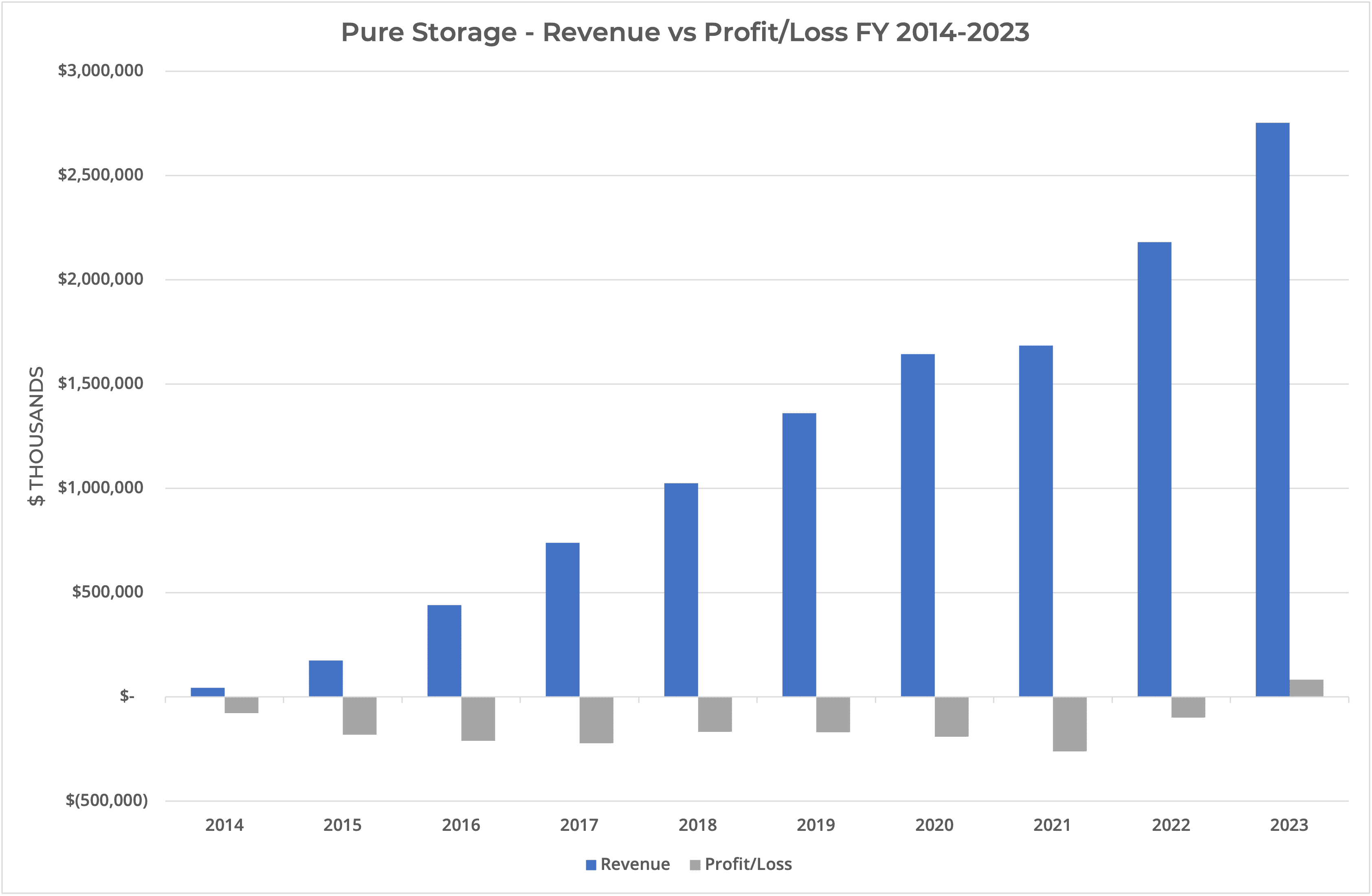
We last looked at Pure Storage’s financial data back in September 2022. Since then, the company has announced the FlashBlade//E platform, focusing on unstructured data. We’ve updated our charts to show full-year graphs and quarterly numbers, shown throughout this article as figures 2 to 5. Pure Storage now has approximately 11,000 customers, adding close to 500 in the last quarter.
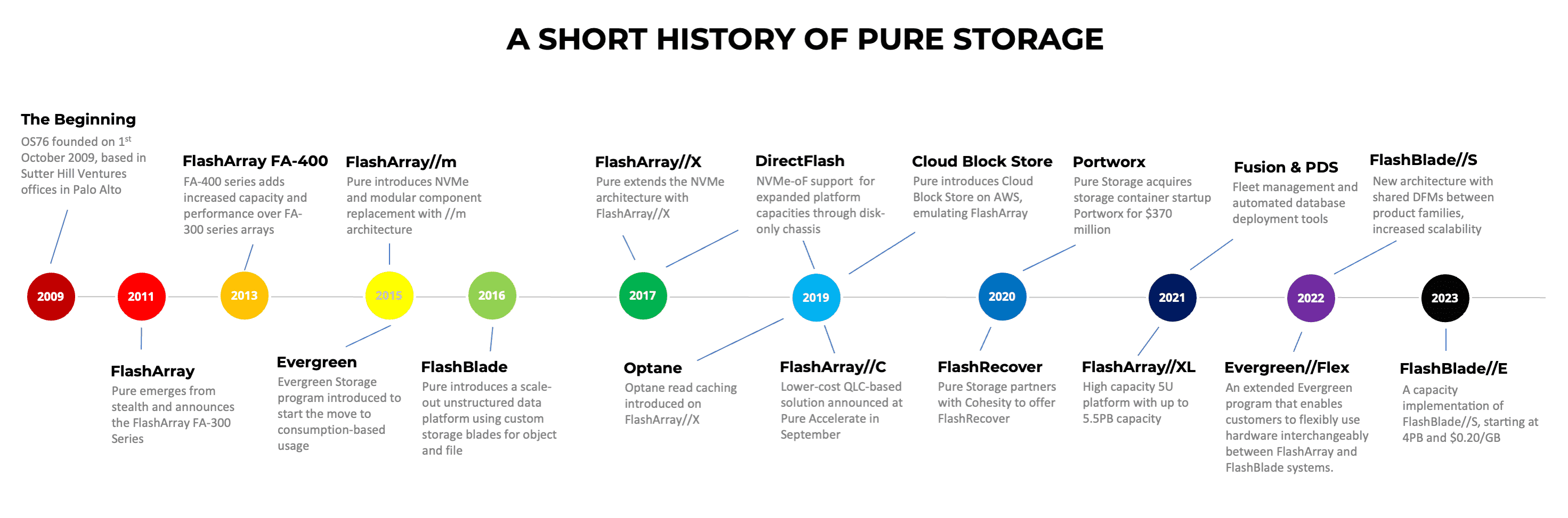
Figure 1 shows the range of products now offered by Pure Storage. The announcement of FlashBlade//E increases the hardware TAM to cover the replacement of HDD-based platforms by all-flash that would otherwise go unrepresented.
TAM
The extension of FlashBlade//E into the HDD and hybrid array segment is quite significant. Unstructured data can be divided into large-scale archives of relatively inactive data, where low cost is the critical metric. At the other end of the scale, unstructured performance is driving analytics and the burgeoning market of data analysis. As data processing becomes more widespread for these segments, having two separate product families introduces the additional cost of management, fragmentation, and underutilisation.
FlashBlade//E will allow Pure Storage to engage in more conversations where potential customers are looking to replace legacy HDD-based systems and do more with the data stored. There are three pillars on which to base those discussions:
- TCO – Total Cost of Ownership – a base calculation that shows whether all-flash-based products are more cost-effective than HDD systems when power, space, cooling and management are taken into consideration.
- TCV – Total Cost of Value – an additional calculation that enables potential customers to generate more value when data moves to an all-flash system, compared to HDD. Migrating data could see greater levels of processing or enable new projects without creating copies of data.
- TCF – Total Cost of Flexibility – when data is on a single logical platform family, wastage can be eliminated, data is more easily moved around the physical infrastructure and growth is accommodated by adding the right resources. In the case of Pure Storage, this means exploiting the data collected by Pure1.
Architecture
As we’ve discussed many times (and at risk of over-labouring the point), architecture matters. FlashBlade//E opens the discussion on a roadmap to 300TB DirectFlash Modules, power consumption reducing to milliwatts per TB and costs into the pennies per GB. These goals wouldn’t be achievable without the right architecture, the right financial model and the right software (including SaaS). We discuss this in a post we released in December 2022 entitled “Delivering True Storage-as-a-Service”.
Cautions
At this point in time, we don’t see any reason why Pure Storage can’t continue to grow revenues, as the company must already be claiming market share from its competitors. However, this growth is limited by a storage market that’s constrained by the development of the public cloud. In addition, current market conditions will see a slowdown in growth, at least for the short term.
Another challenge is that we don’t hear much about Pure Storage’s cloud strategy (we haven’t seen any CBS announcements recently), although Portworx continues to evolve and be one of the leaders in Container-Native Storage (see our report for more details).
Back in June 2021, we suggested further acquisitions, covering data protection and perhaps moving into the analytics market. Today, those kinds of company purchases look expensive (overly so) in a competitive market. A first step could perhaps be to add storage management analytics capabilities, enabling customers to track and optimise data assets across structured and unstructured platforms, including data protection. This area needs further thought; however, our basic data management hierarchy might point towards some opportunities.
The Architect’s View®
For now, Pure Storage’s financial results look good, with solid products and demand. Never a company to rest on its laurels, the future seems to be about more cost, scale, and efficiency improvements. We’re looking forward to seeing how the cloud and software side of the business will develop and whether new product markets will open up or be developed to continue the growth trajectory.
Copyright (c) 2007-2023 – Post #ps7e – Brookend Ltd, first published on https://www.architecting.it/blog, do not reproduce without permission. Pure Storage is a Tracked Vendor by Architecting IT in storage systems and software-defined storage. Pure Storage has been a customer of Brookend Limited prior to 2023.