

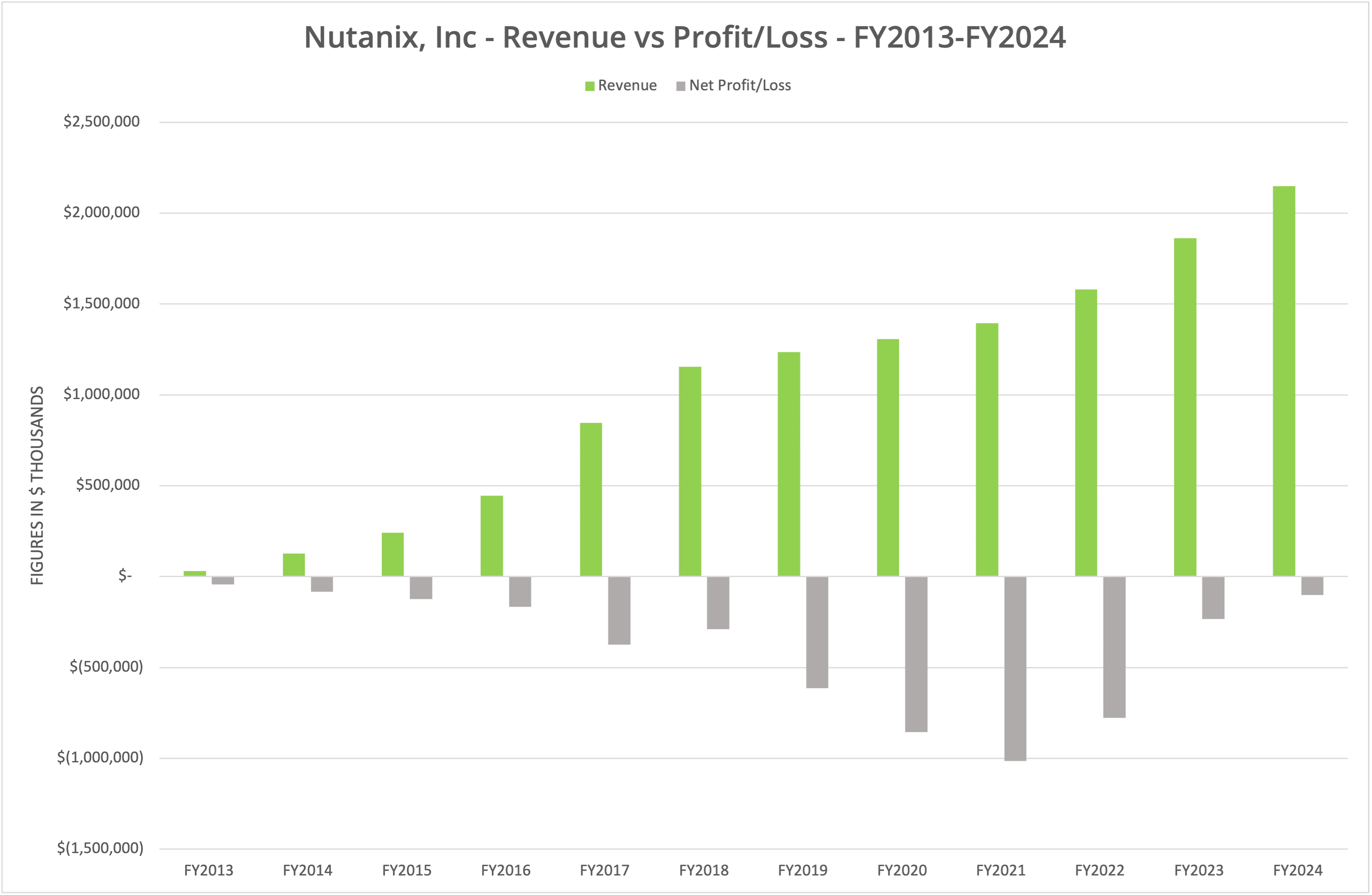
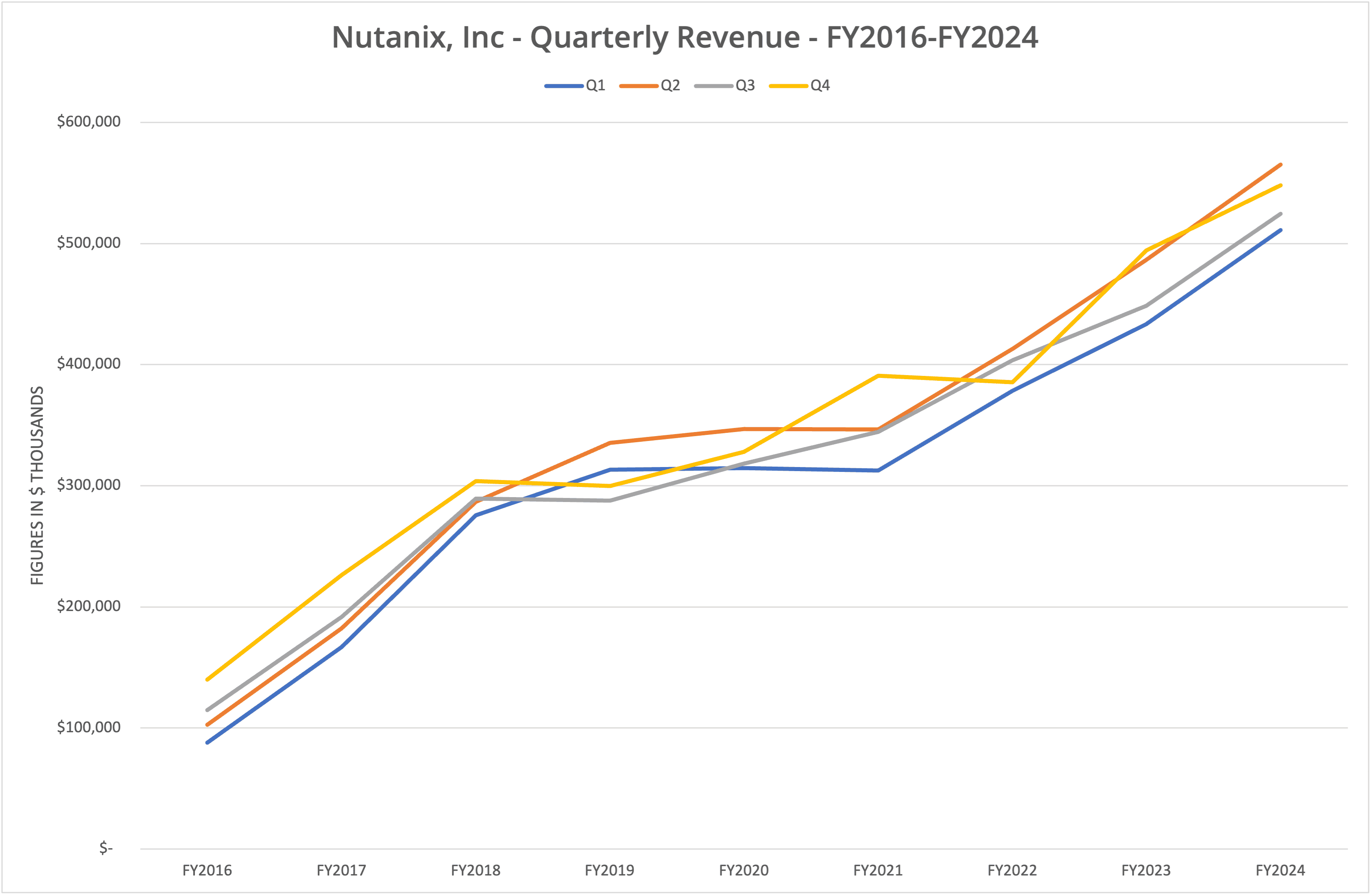
Nutanix, Inc. has announced financial results for the fourth quarter and full year of FY2024. The data shows a 15.3% increase in revenue over FY2023 to $2.1 billion. Revenue for the quarter was $548 million, up 10.8% on Q4 FY2023. However, once again, in both the quarter and the full year, the company declared a loss due to the overhead of expenses.
Background
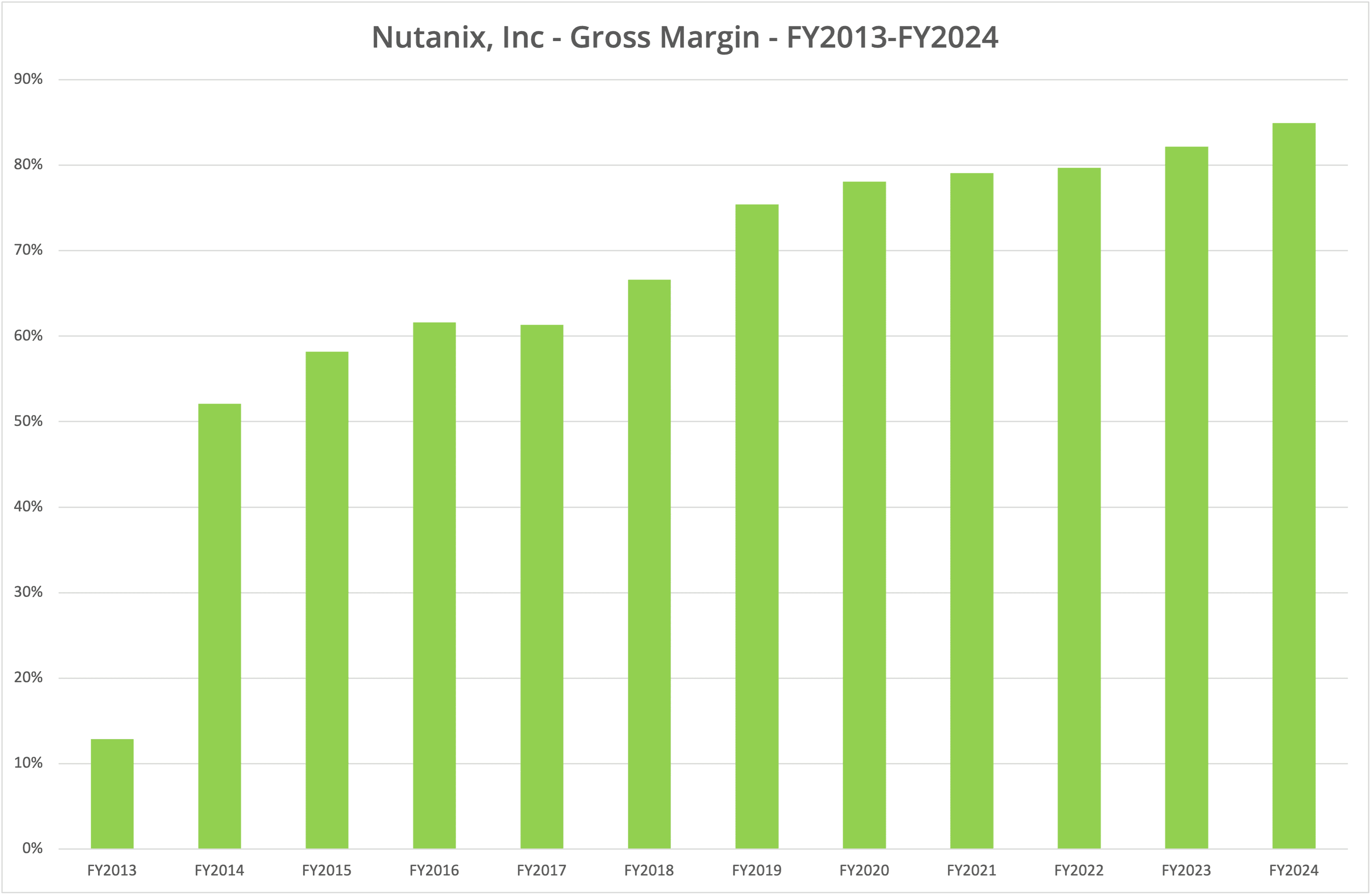
Nutanix has reported financial data for the fourth quarter of FY2024, ending 31st July 2024. For the quarter, revenue was $548 million, up 10.8% on the equivalent quarter in FY2023. Gross margin was 85%. For the full year of FY2024, revenue reached $2.15 billion, up 15.3% on FY2023, with an increase in gross margin to 85% (compared to 82% in FY2023, see Figure 8).
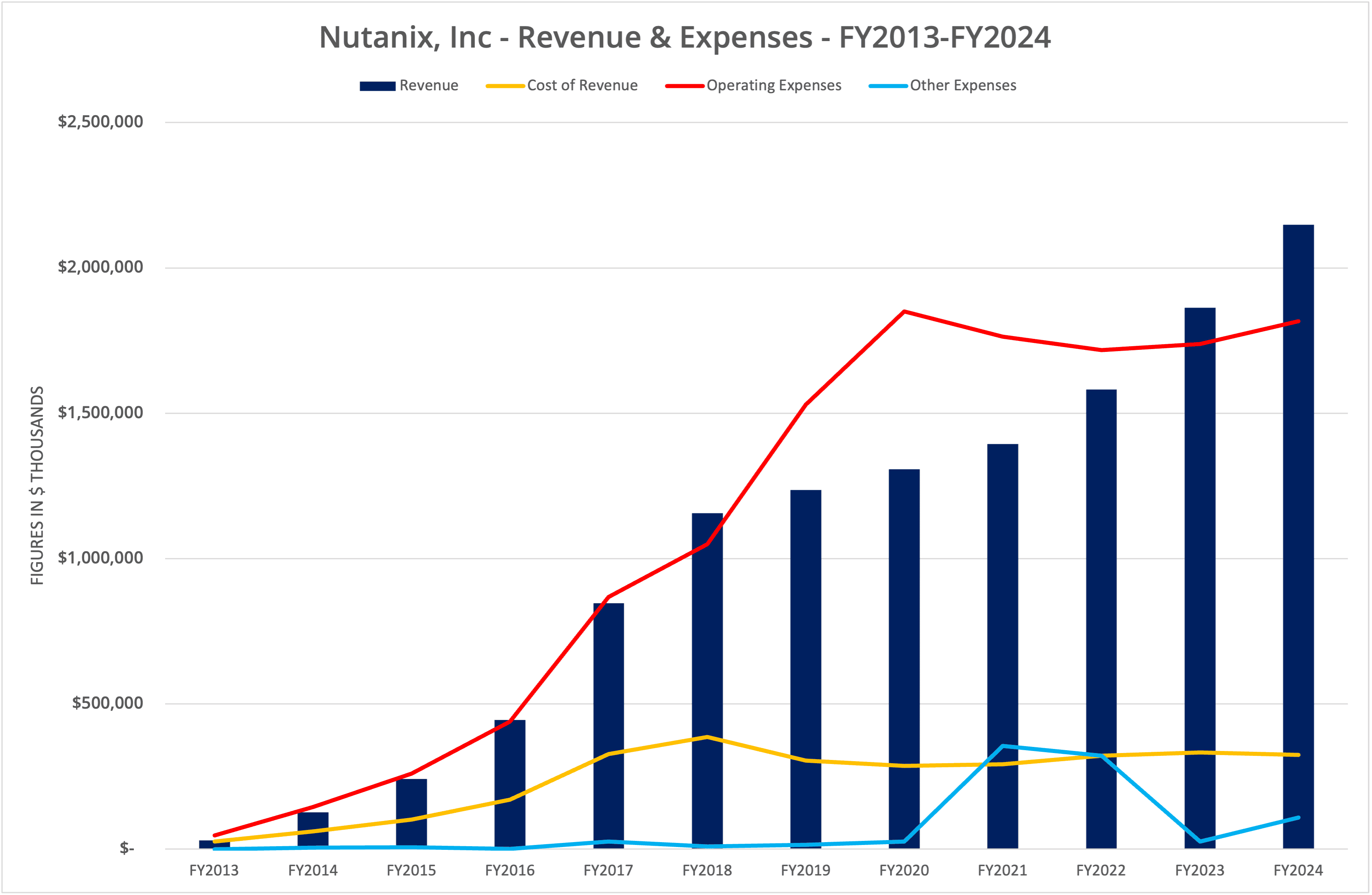
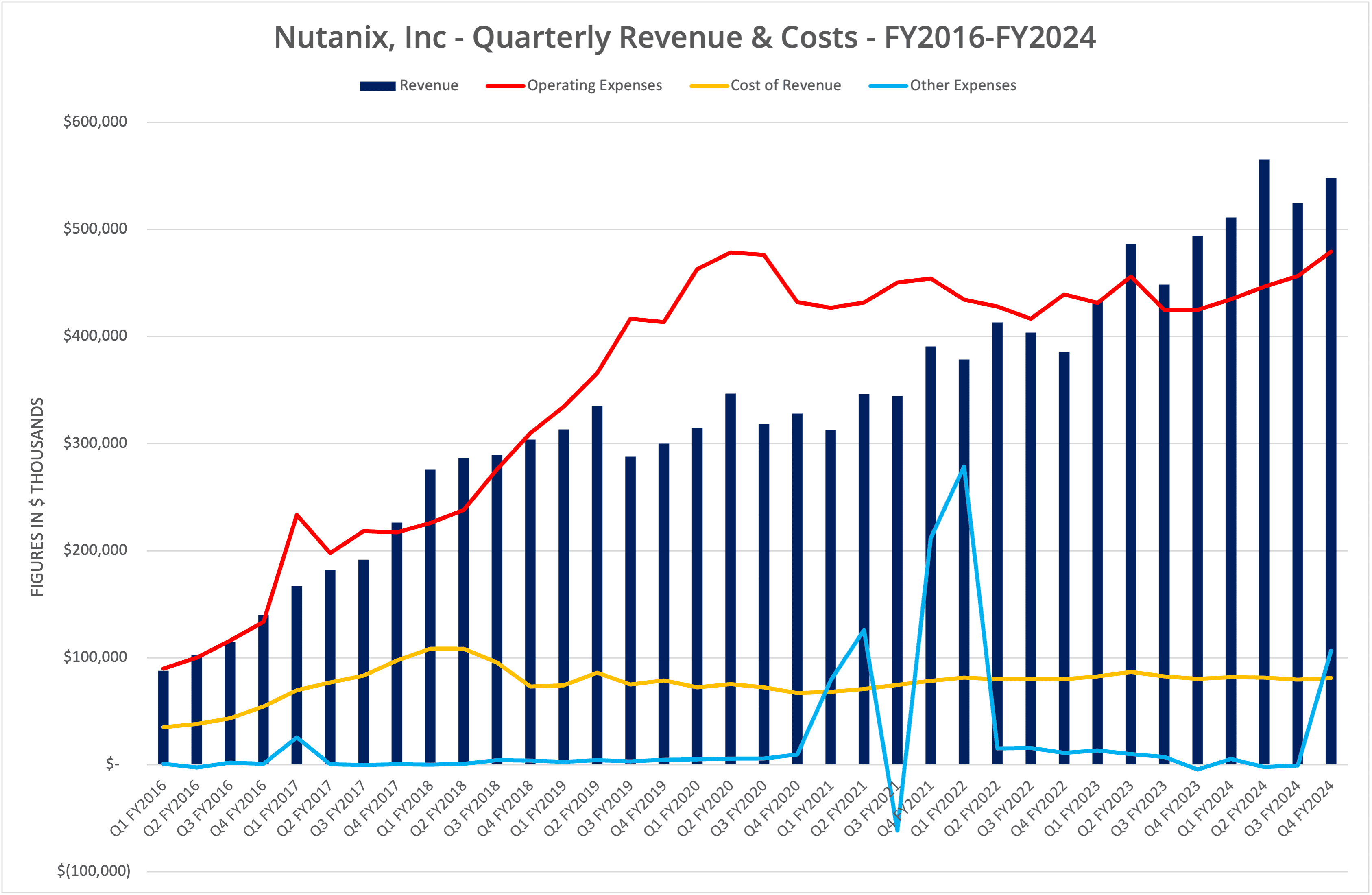
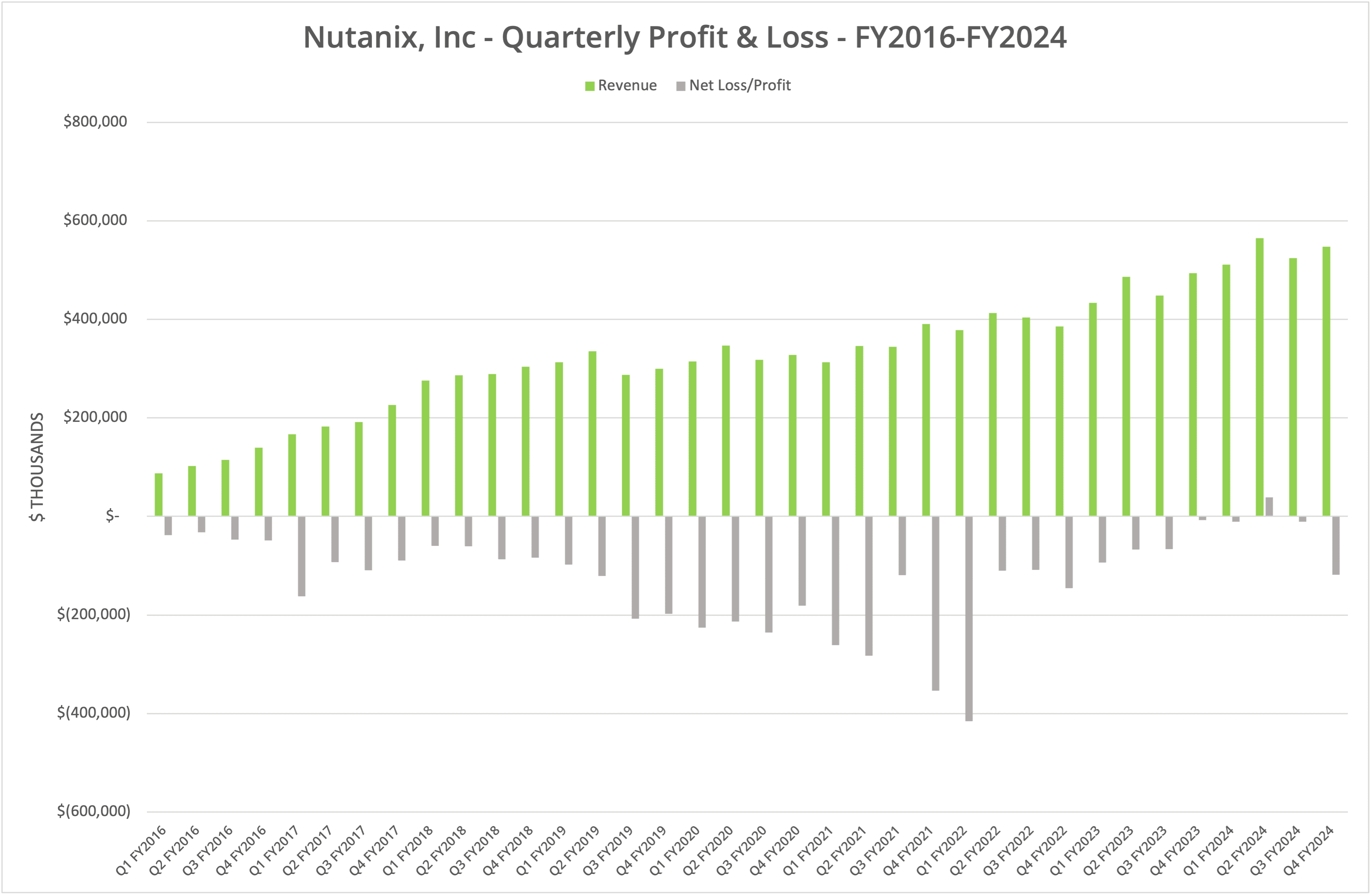
We present the data in eight graphs labelled Figures 1 to 8.
Momentum
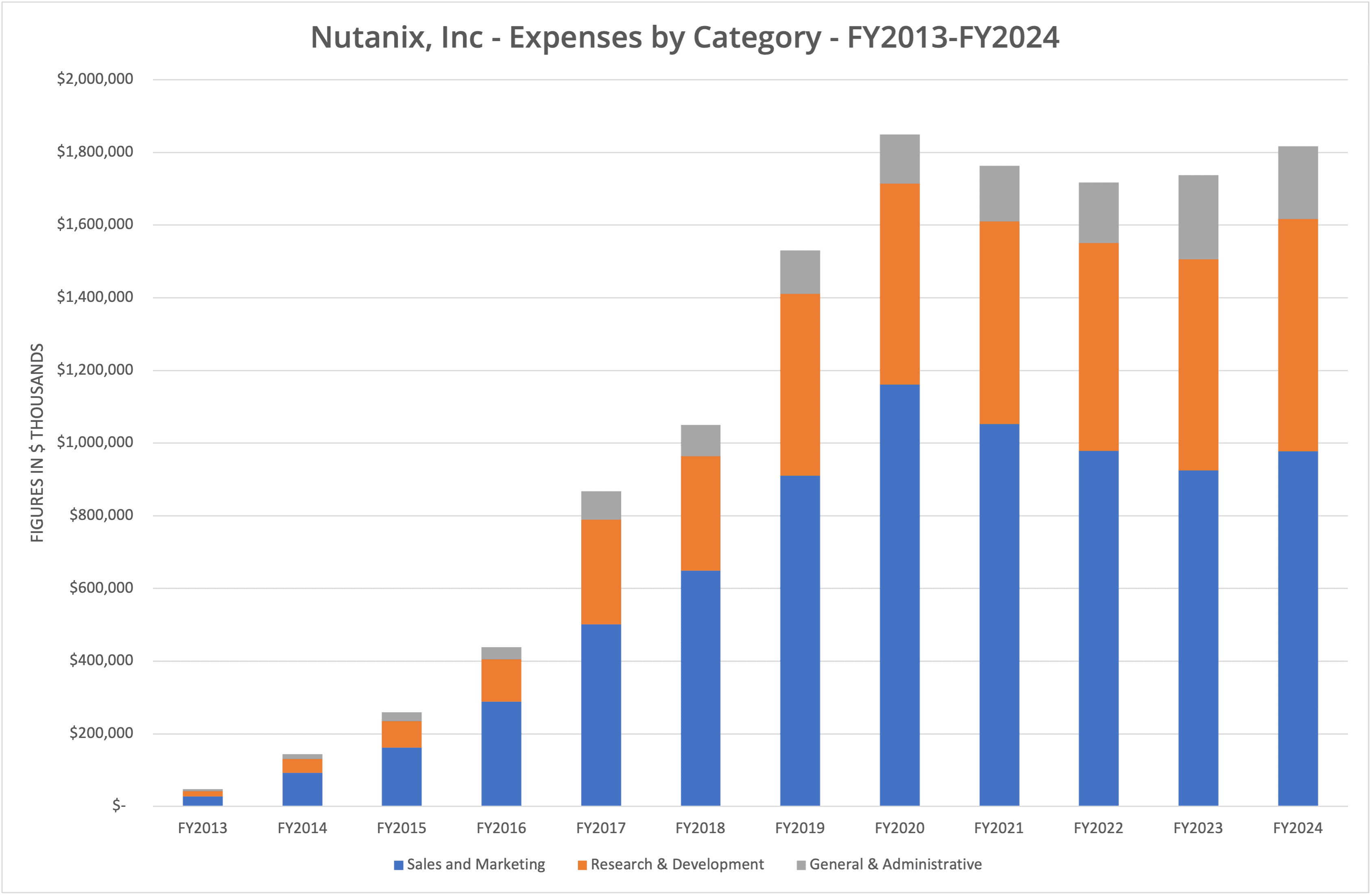
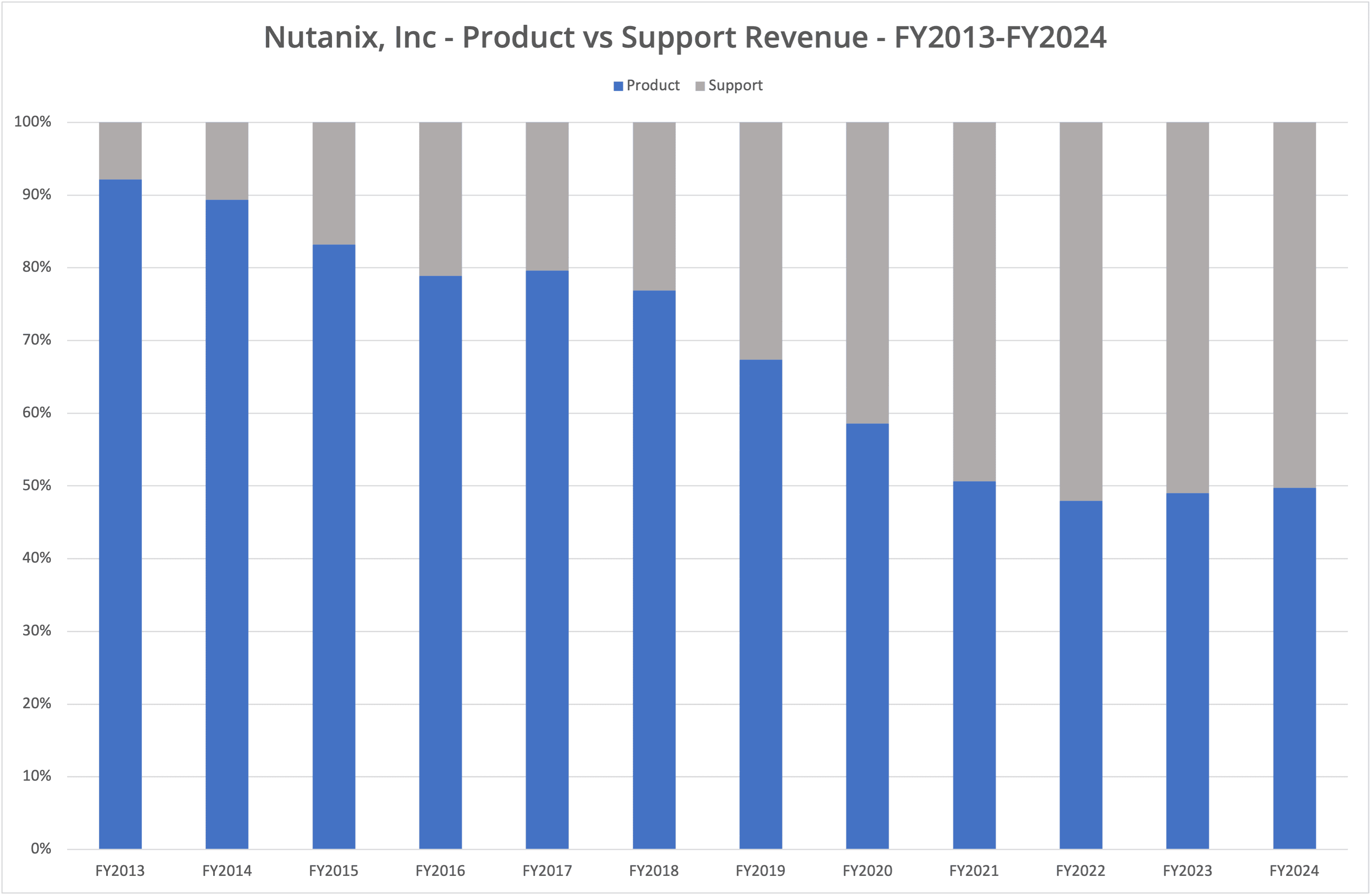
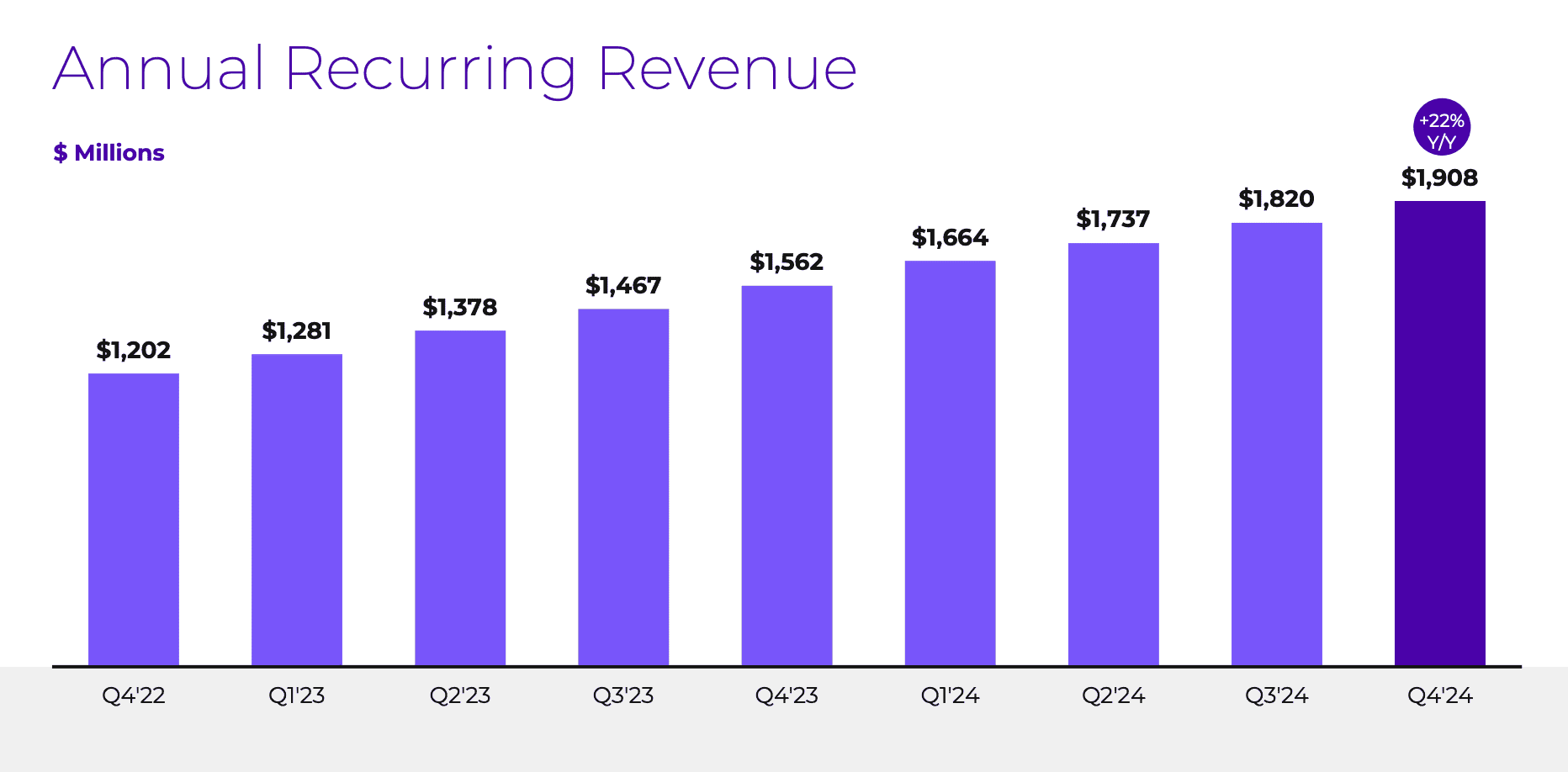
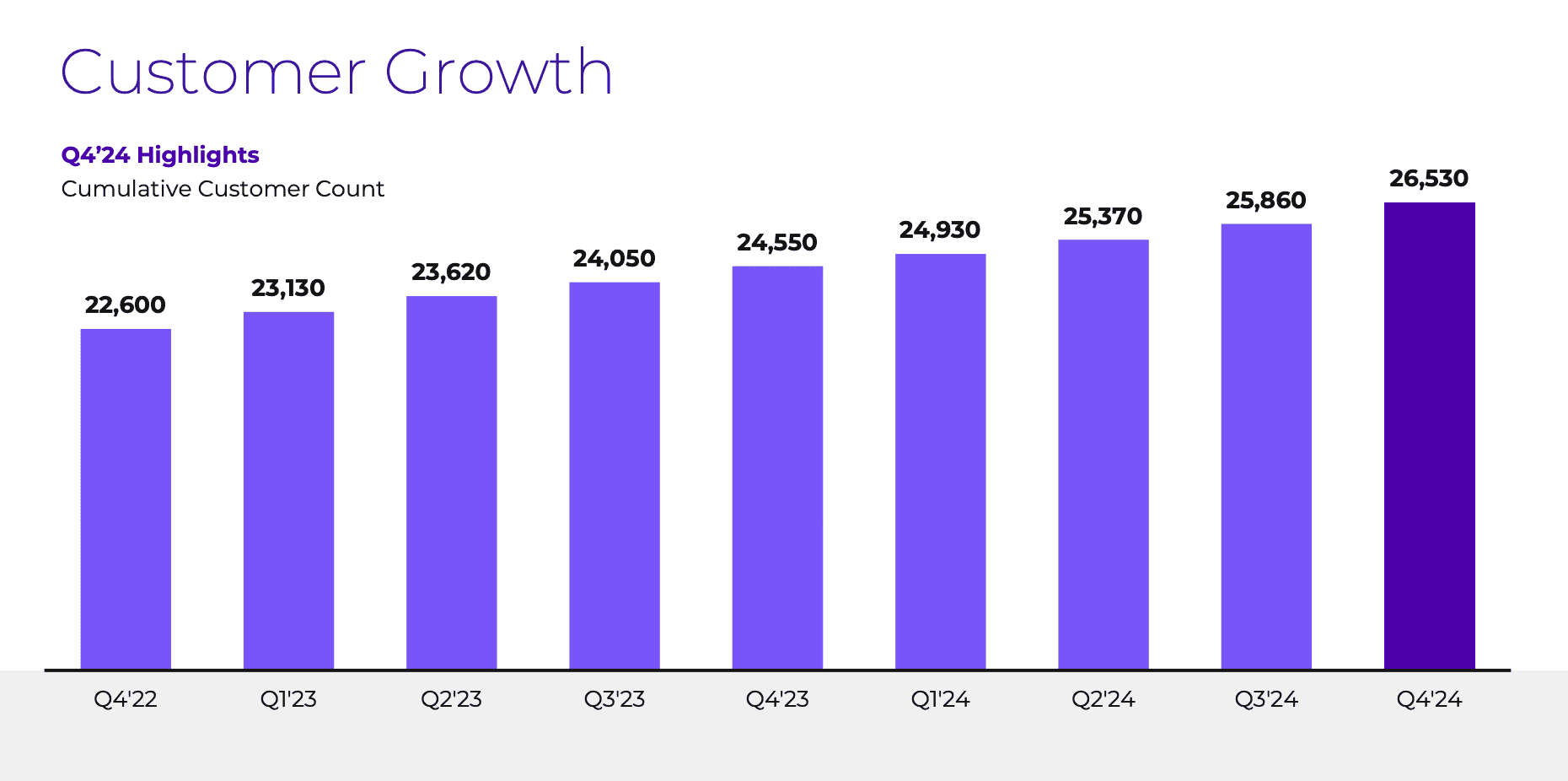
Nutanix continues to grow revenue, with an additional 670 customers added during Q4, taking the total to 26,530. Annual Recurring Revenue (which Nutanix prefers to quote rather than actual revenue) increased by 22% year-on-year to $1.908 billion. As Figures 1 and 2 show, Nutanix is successful in finding and adding new customers. However, although the cost of servicing those customers is relatively flat, operating expenses have increased, as shown in Figure 6. To put this in context, Nutanix spends approximately $0.45 on Sales & Marketing for every dollar of revenue it brings in, although this figure has been declining from its peak of $0.89/dollar in FY2020. Another way to look at the S&M spend is to equate it to new customer acquisition, with $387,105 spent per new customer in Q4 FY2024.
VMware Factor
It’s difficult to determine any gains from the turbulence created by the Broadcom takeover of VMware. At a time when Nutanix should be the primary beneficiary, we can’t see a significant revenue boost. Of course, approximately 50% of Nutanix deployments use VMware (rather than the native Nutanix AHV), so moving from existing infrastructure to one based on Nutanix needs to offer more benefits than refactoring. AHV, for example, does not support external storage in the form of a Storage Area Network (SAN), which will be a challenge for customers who do not want to commit to the HCI model.
There are also significant migration challenges to overcome when moving from vSphere and ESXi to AHV. This includes reskilling and rewriting processes and procedures to work with the new platform.
Innovation
A quick review of the announcements made by Nutanix shows little in the way of product enhancements during 2024. There have been several partnership announcements, but product updates appear to be incremental. Is this a lost opportunity? In these two posts (here and here), we highlighted the rate of incremental change at VMware, including the deferring of next-generation updates into 2025, with the release of VCF 9, which seems to be focused more on operational integration than new capabilities. Nutanix could use this tardiness to its advantage.
In June 2024, Nutanix repaid a $750 million loan from Bain Capital made in 2020. This cost the company $817 million in cash and $900 million in shares (16.9 million). The balance sheet for cash and short-term equivalents reduced from $1.651 billion in Q3 to $994 million. Nutanix spends around 30% of revenue on R&D, which is down from a high of 40% in FY2020. Are we seeing enough innovation from the R&D spending, and could it be affected by the reduction in cash to pay Bain?
The Architect’s View®
It is clear that Nutanix has no problem acquiring new customers, irrespective of the turmoil at VMware. However, we wonder whether the HCI model could be a challenge for some prospective customers, especially those with existing investments in centralised storage, file systems, and object stores. AHV doesn’t appear to have captured the imagination of IT teams as an alternative to VMware, which should be a concern.
The question for all VMware competitors, including Nutanix, should be to ask what made VMware so successful. The answer is multi-faceted, including a lean, bootable type-1 hypervisor, widespread storage support, and a mature ecosystem. However, some of those features are now an issue, with complexity, sprawl and (arguably) bloatware in VCF causing concerns.
Nutanix still has an opportunity to make significant gains from VMware. We believe this means abandoning the HCI ideology and addressing customers’ needs directly. Migration from ESXi to AHV needs to be seamless and not require the abandoning of existing processes and infrastructure. In parallel, cutting expenses will allow Nutanix the elusive goal of profitability and the ability to be a long-term player in the infrastructure market.
Copyright (c) 2007-2024 – Post #cbcb – Brookend Ltd, first published on https://www.architecting.it/blog, do not reproduce without permission.