

Commvault Systems, Inc. has announced financial results for the third quarter of FY2025, achieving revenue of $262.6 million, up 21.1% on the same quarter in FY2024 (12.6% sequentially). ARR grew to $890 million (18% up), while subscription ARR increased 29% to $734 million. As the company pushes further to $1 billion in annual revenue, what’s next on the agenda?
Background
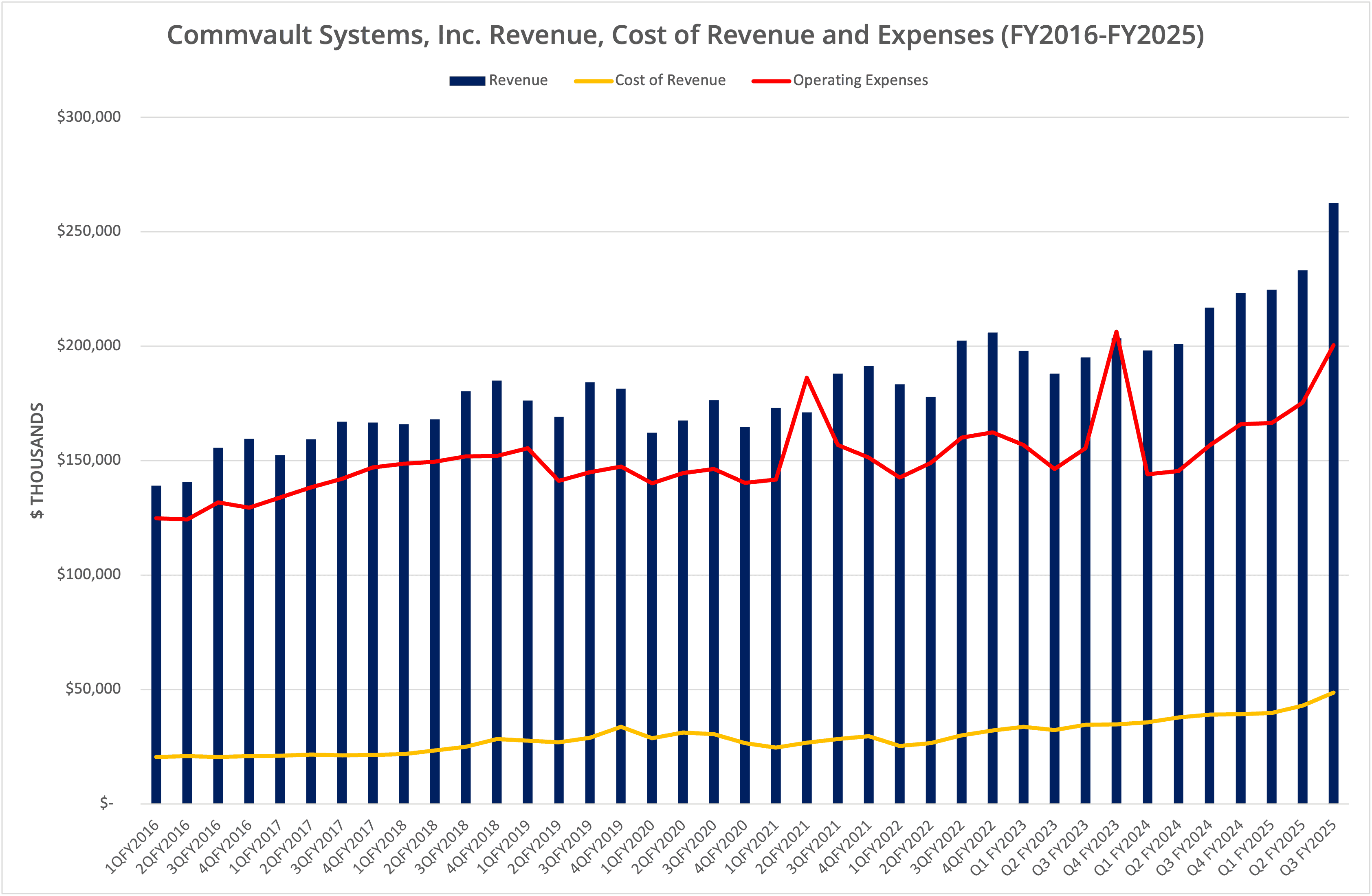
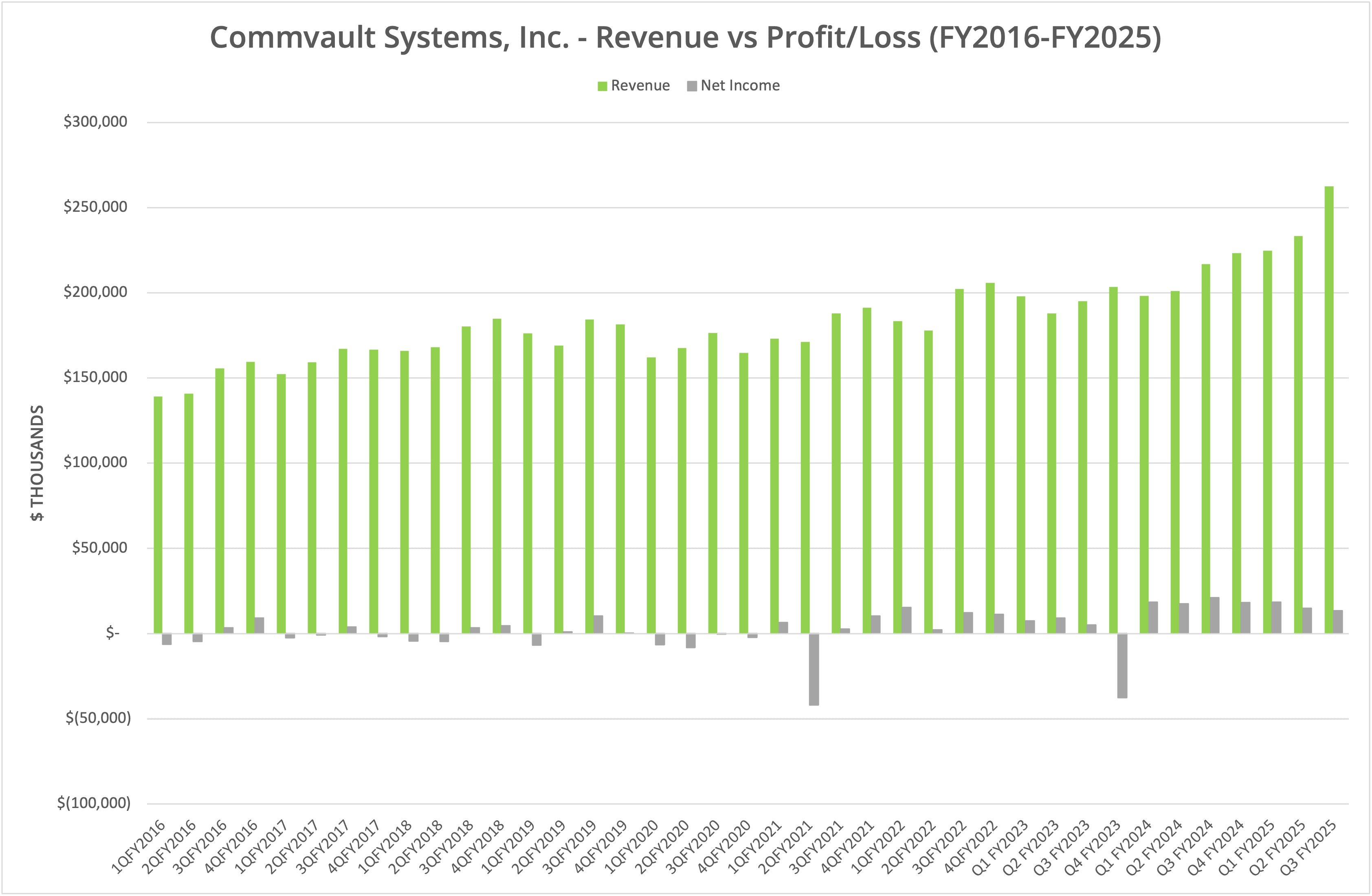
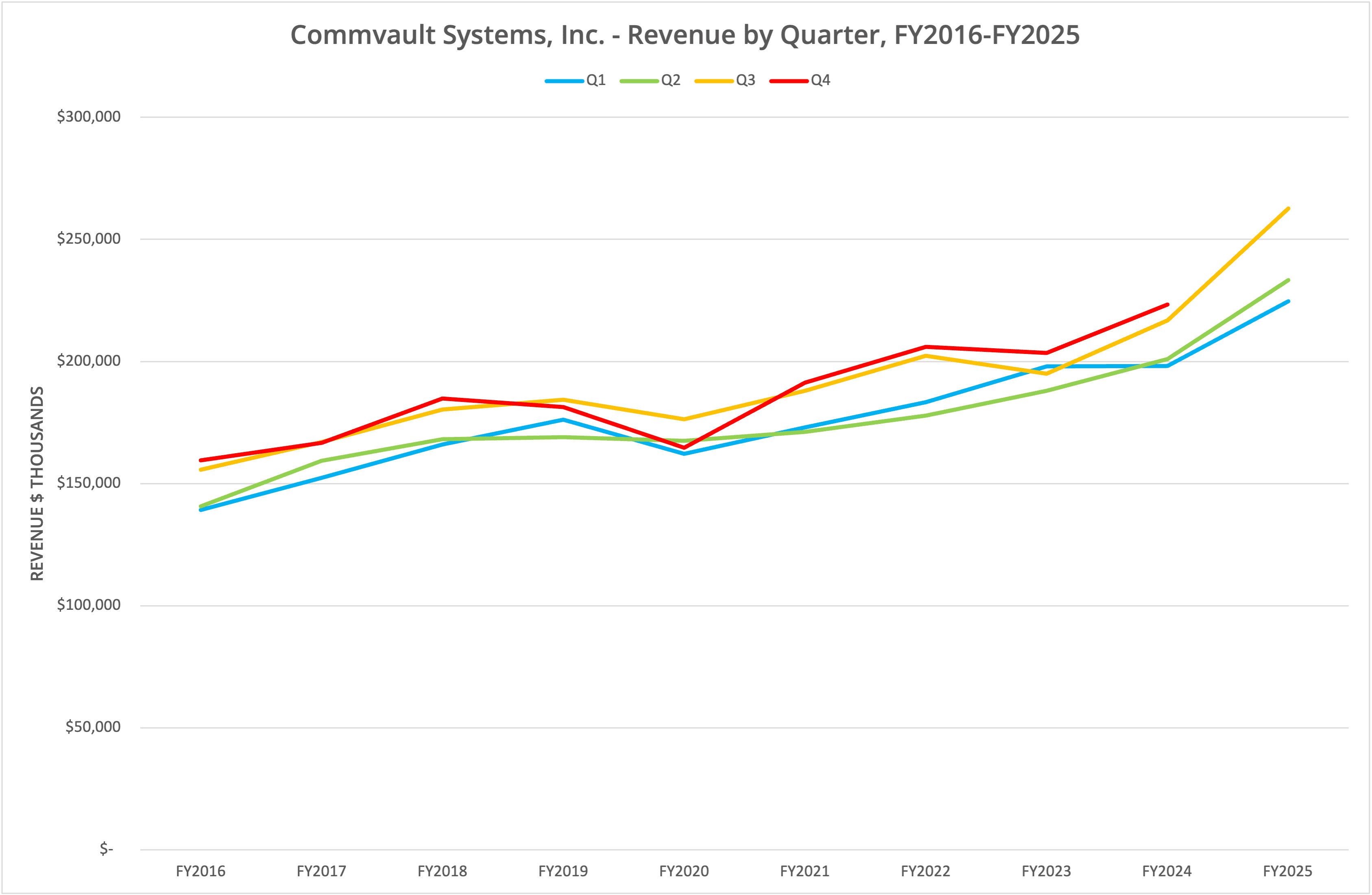
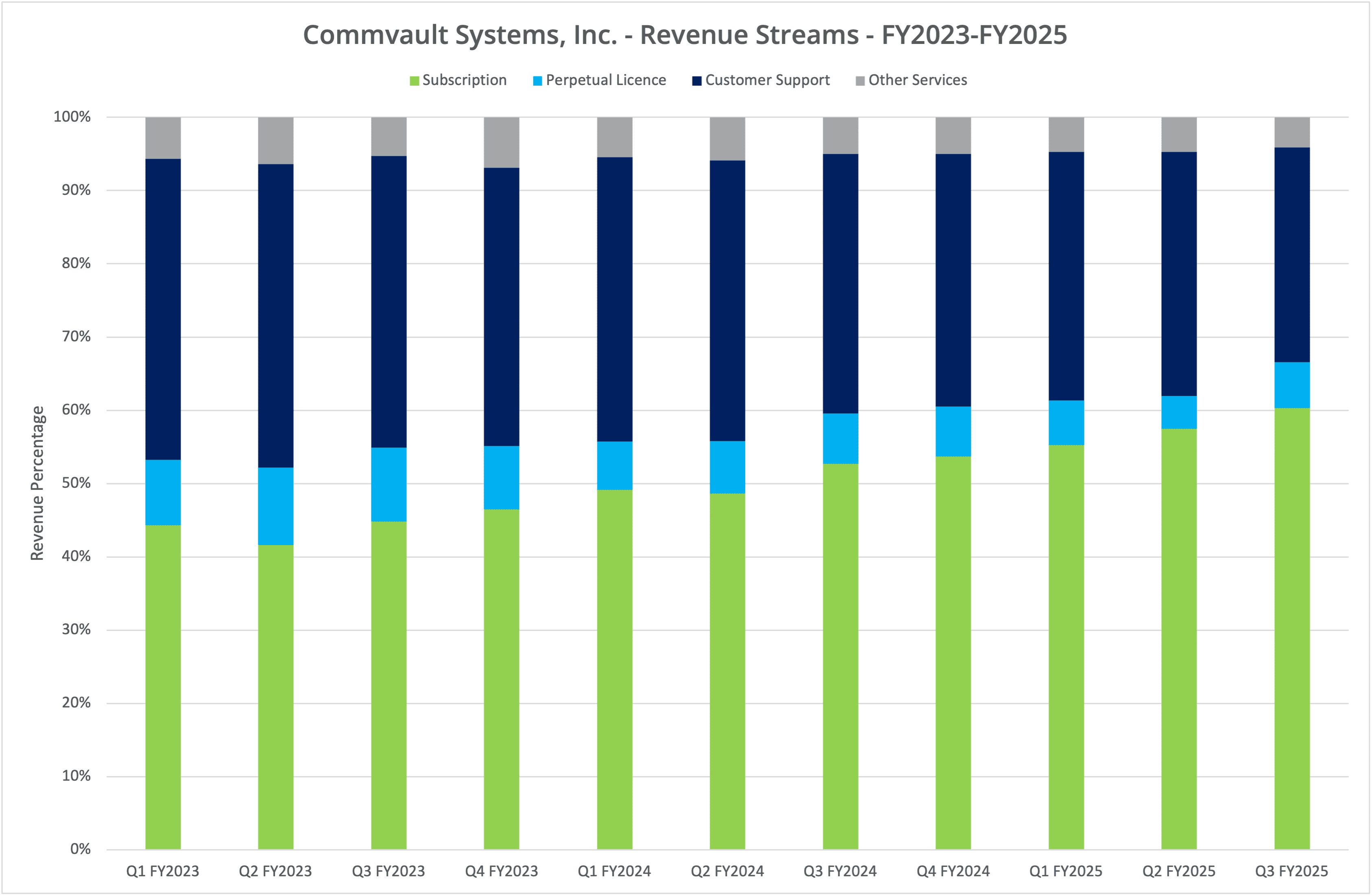
Commvault Systems, Inc. has published financial data for Q3 FY2025. This shows revenue of $262.6 million, up 21.1% year-on-year and 12.6% sequentially. Subscription revenue grew 38.6% year-on-year in the same period. The company declared a profit of $13.6 million. We present the data in four graphs, labelled Figures 1 to 4.
Growth
Once again Commvault has grown revenue, and as shown in Figure 1, by more than the previous quarters. The acquisitions of Clumio and Appranix were not expected to be significantly accretive immediately, but these platforms do expand the current customer landscape and so will have added something to the top line revenue.
During FY2025, operating expenses have increased, partly due to costs associated with the two acquisitions and a further legal settlement, the details of which weren’t shared (see the notes at the end of the earnings release).
Transition
As we’ve discussed many times before, Commvault is in a transition to a subscription-based business. Figure 4 shows the quarterly change over time, as the relative revenue from customer support and perpetual licences trends downwards, being replaced with increasing subscription revenue.
The acquisitions of Appranix and Clumio will add to this transformation. Clumio has a business based on S3 and unstructured data protection, while Appranix provides the capability to “rewind” the state of virtual infrastructure, recovering from either a disaster scenario or a ransomware attack.
Holistic
All of Commvault’s recent acquisitions are aimed at creating a more “holistic” approach to both disaster recovery (DR) and data protection (DP). Depending on the size of an organisation, DR and DP could have been handled very differently, depending on service level objectives.
Commvault now has the capability to attack the DR market using the rebranded Appranix platform (Cloud Rewind), specifically focusing on protecting and recovering cloud environments.
The Architect’s View®
As we’ve highlighted in the past, data protection is a Darwinian problem that will never be completely solved. As data protection vendors increase their resilience, the hackers will adapt and look for new vulnerabilities, particularly focusing on social engineering.
In that respect, Commvault must focus on several areas:
- Proactively mitigate attacks before they occur.
- Detect and respond to attacks as they occur.
- Provide timely recovery in the event a ransomware attack or other incident happens.
- Provide forensic diagnostics to address the root cause of any data loss scenario.
Many of these capabilities are already in place, with the recent Appranix and Clumio acquisitions, as well as TrapX, which delivered the ThreatWise capability. Forensic capabilities are provided by Commvault Cleanroom technology.
We think there are further steps that Commvault can take, pushing the boundaries of proactive detection and “posture management”. This means either working with or acquiring network security vendors that can help harden customer environments and detect weaknesses and exposures.
Another area of opportunity for Commvault is to expand SaaS support into a generic capability rather than bespoke implementations per platform.
One final thought. Cohesity completed its acquisition of Veritas’ data protection business in December 2024. Consequently, the company will be heavily focused on retaining those legacy customers using Veritas data protection software, by moving them to the Cohesity platform and protecting their long-term backups for future access.
Commvault needs an answer to this position, as unless customers have some form of migration strategy, the temptation will be to remain within the Cohesity/Veritas ecosystem.
We’re interested to see what 2025 brings, especially for the consolidated market as vendors compete for business, while data protection continues to evolve in complexity.
Copyright (c) 2007-2025 – Post #446c – Brookend Limited, first published on https://www.architecting.it/blog, do not reproduce without permission.