

Following rumours over the last few days, IBM has confirmed it intends to acquire HashiCorp, Inc. for $6.4 billion or $35 per share. Recent IBM financials show little growth; the acquisition will be accretive to future revenue and cash flow, but how will HashiCorp be integrated into the broader organisation?
Background
IBM has officially announced it intends to acquire HashiCorp, Inc. for $35 per share or approximately $6.4 billion, in an all-cash transaction. During the Q1 FY2024 earnings call, IBM CFO Jim Kavanaugh indicated the transaction would be accretive to EBITDA in the first full year following the acquisition close and to free cash flow in year two. This will be achieved through operating efficiencies (more on that in a moment).
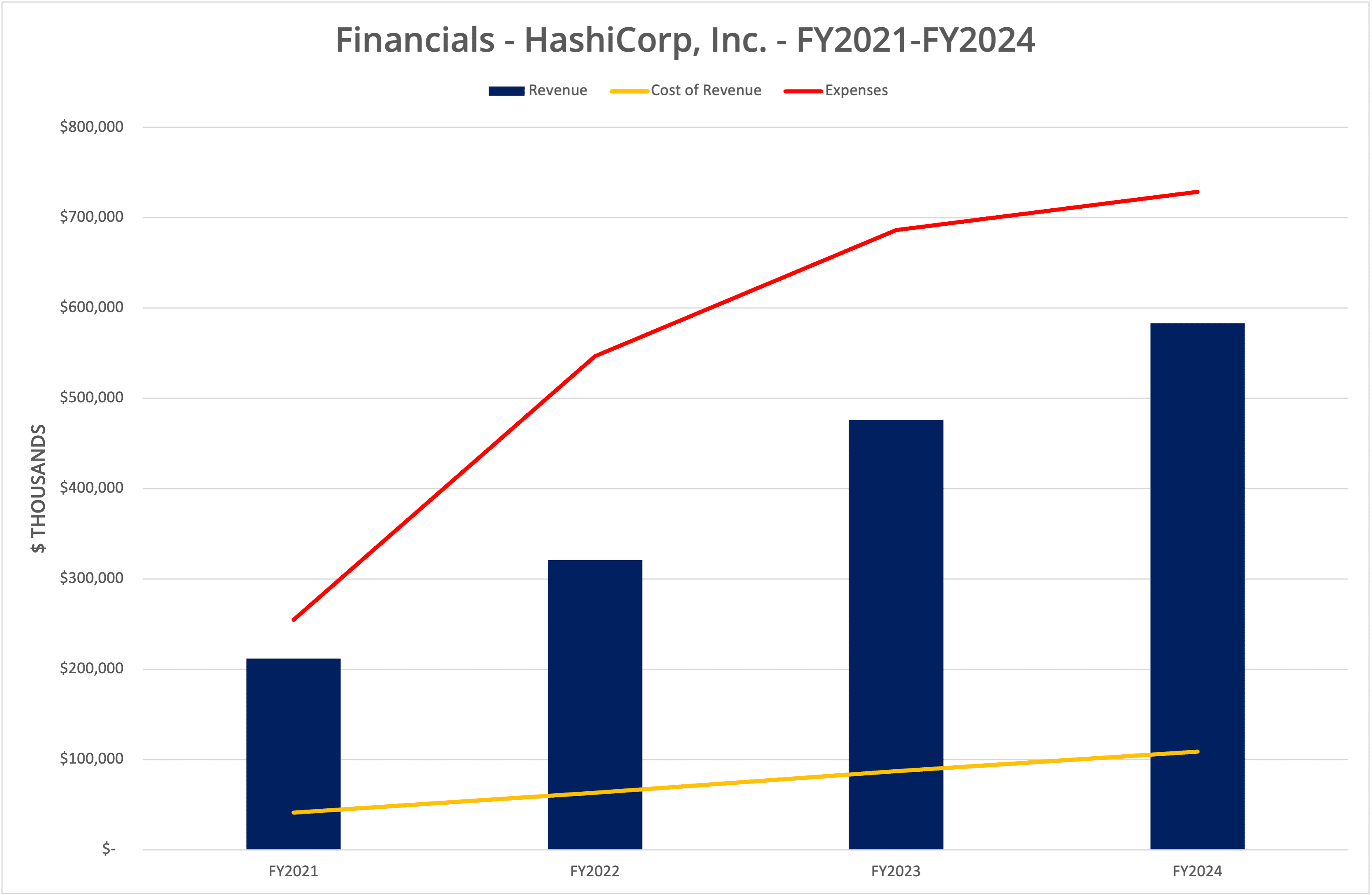
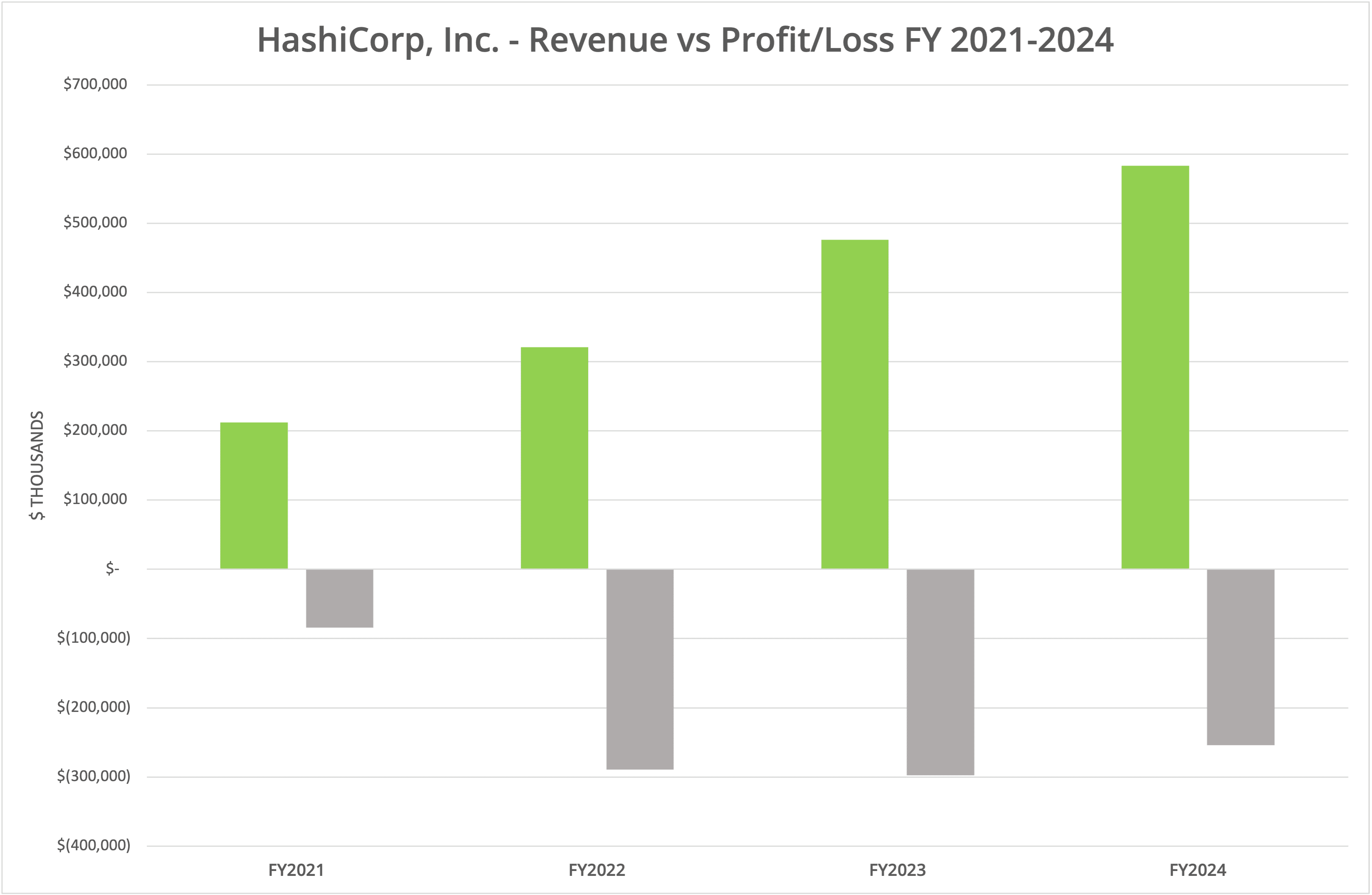
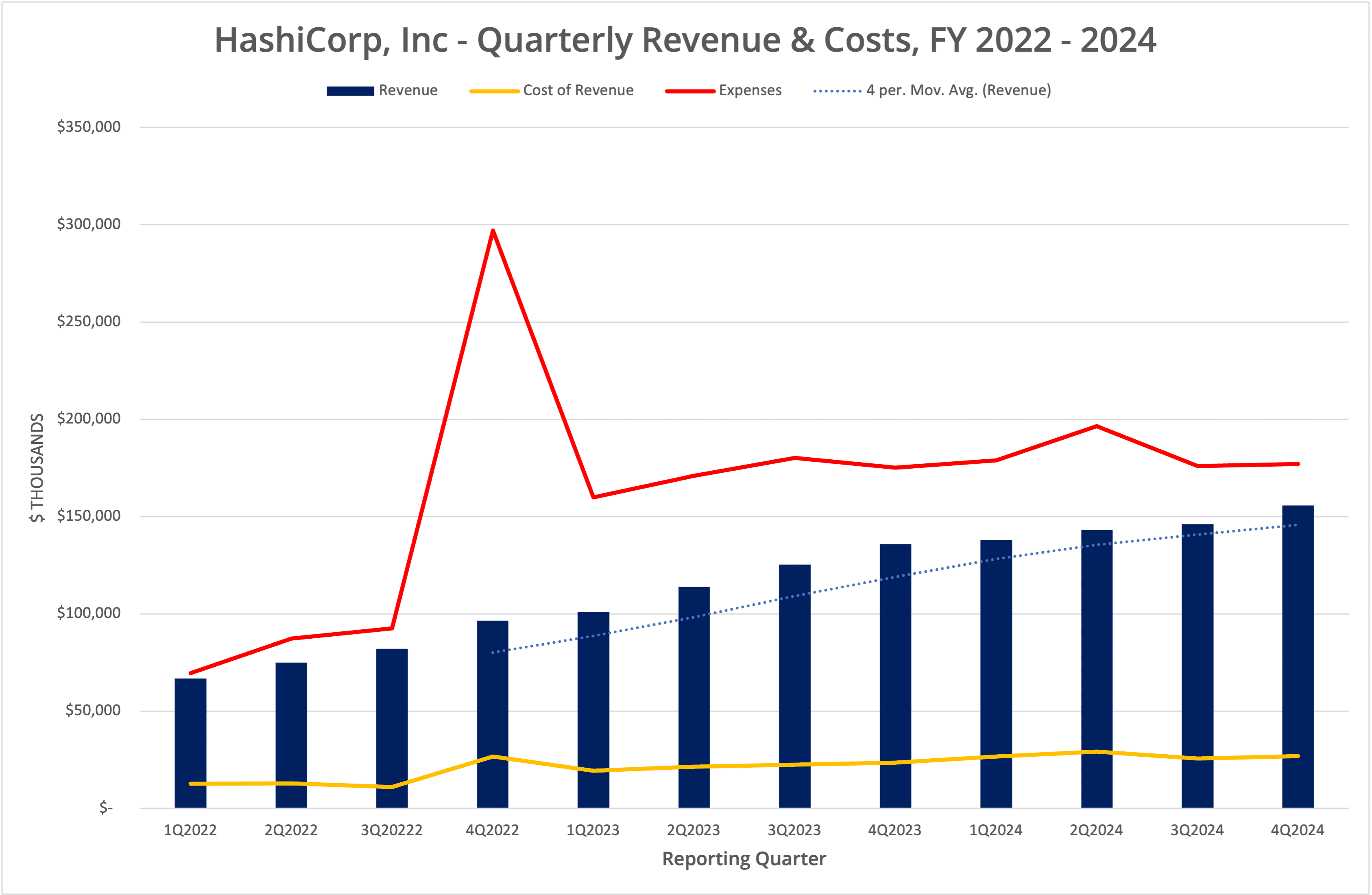
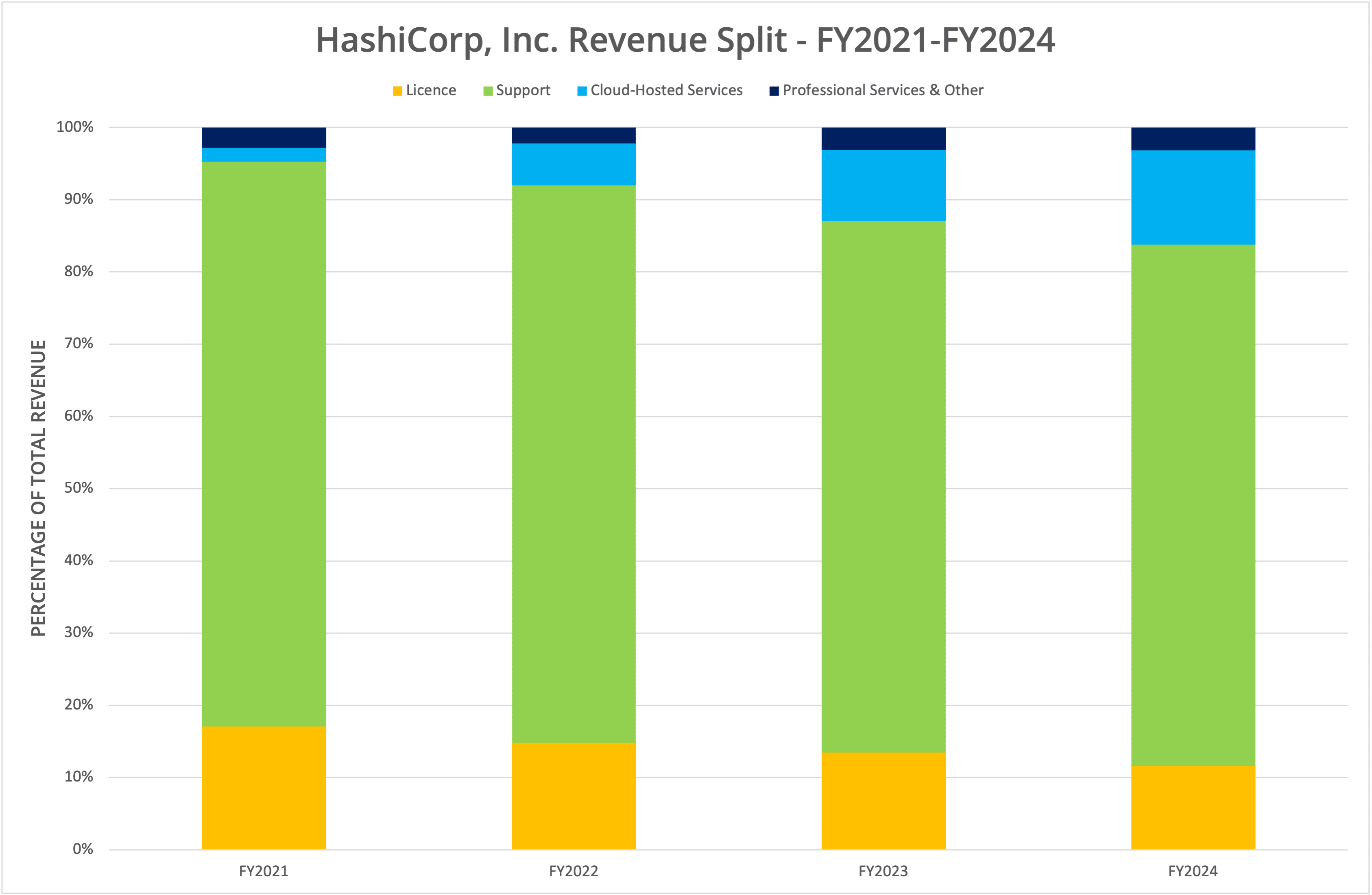
HashiCorp currently claims approximately 4,400 customers, $156 million in revenue and almost 900 customers with greater than $100,000 in annual recurring revenue. The company raised $350 million across five funding rounds, going public in December 2021. We’ve included some financial charts from the public data available.
Product or Feature?
HashiCorp evolved from an opportunity spotted by co-founder Mitchell Hashimoto, who realised that the automation features of CloudFormation in AWS could be ported to the enterprise. This eventually resulted in Terraform, an automation tool for building and managing virtual infrastructure. The portfolio of products has since been expanded into the following four categories.
- Infrastructure
- Terraform – deployment of infrastructure with code
- Packer – image automation in code
- Networking
- Consul – multi-cloud networking
- Security
- Vault – identity-based security
- Boundary – secure remote access and zero trust
- Applications
- Nomad – workload orchestration
- Waypoint – application development workflows
- Vagrant – environment workflows
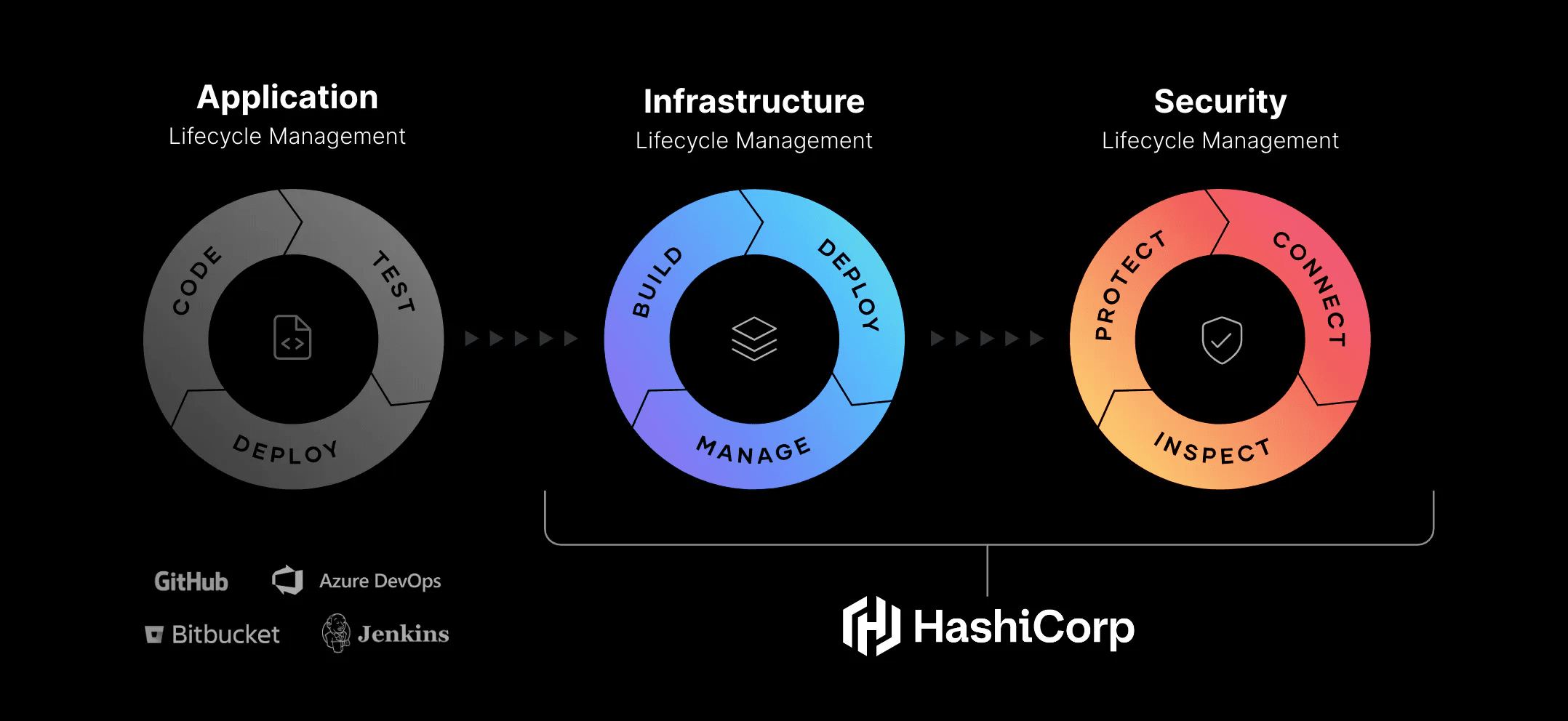
Individually, these solutions do have value within the enterprise but feel more like a set of separate tools rather than a portfolio of products with a specific strategy behind them. Clearly, HashiCorp thinks the same, and only two days before the acquisition was announced, the company introduced the concept of the Infrastructure Cloud. As shown in Figure 1, HashiCorp wants to be the default provider of solutions for Infrastructure and Security Lifecycle Management. Most of these products will be offered as SaaS using HashiCorp Cloud Platform (HCP).
What About Data?
The three lifecycle concepts shown in Figure 1 don’t cover probably the most critical asset for any business – data. This is arguably where the IBM acquisition makes sense, with a fourth circle representing the data lifecycle management process. In reality, there could have been any number of suitable acquirers for HashiCorp – IBM just got there first. The important aspect is that HashiCorp will be integrated within a company that understands the data component.
The Architect’s View®
As our financial graphs show, HashiCorp’s business is growing, but so are expenses. Assimilation into IBM will fuel growth, and no doubt be met with ruthless cost-cutting, in part because the sales process will fall to IBM representatives already in place with large enterprises.
However, there are some initial observations we need to make, that will be covered elsewhere in our content. First, with an existing automation tool in place, how will IBM balance the capabilities of both Ansible and Terraform? Second, does the acquisition by IBM put more justification behind the OpenTofu fork? Third, and yet to be seen or discussed, exactly where and how will IBM integrate HashiCorp?
It might be assumed that IBM could take the same approach it followed with the acquisition of Red Hat and keep the company (relatively) independent (IBM did move storage solutions in-house). However, with significant overheads, HashiCorp is still a loss-making business, so some structural change is necessary.
Don’t forget that IBM already owns cloud management tools in the form of Apptio (acquired in 2023) and Turbonomic (acquired in 2021). With the inclusion of HashiCorp, IBM has been quietly building a suite of cloud management tools (AIOps), which we think could be merged with capabilities from Red Hat to enhance an already appealing portfolio of hybrid cloud solutions.
Of course, with the ink barely dry on any agreement, our suggestions are still speculative. We look forward to seeing exactly how HashiCorp evolves within IBM.
Copyright (c) 2007-2024 – Post #7d3d – Brookend Limited, first published on https://www.architecting.it/blog, do not reproduce without permission.