

Pure Storage has announced Q2 revenue figures for financial year 2023 that show 30% revenue growth year-on-year and an increased forecast for FY2023 to $2.75 billion. With a set of results that seem to buck the trend of recent announcements, how is Pure Storage differentiating?
Background
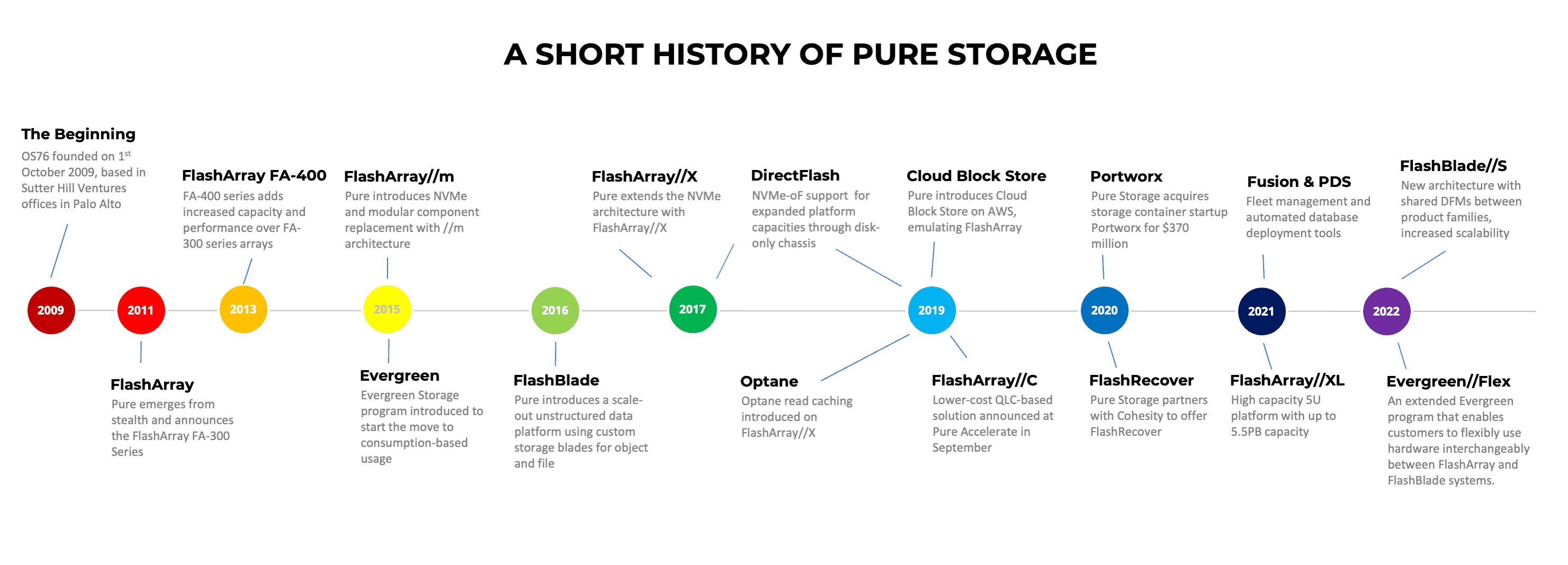
We last looked at Pure Storage financial data back in June, as the company prepared to launch its annual Accelerate event. Growth slowed slightly in FY2021 due to pandemic impacts (see this podcast we recorded at the time), then recovered strongly in FY2022. Figure 1 shows the addition of new products and services, namely FlashBlade//S and Evergreen//Flex, both announced at the Accelerate event.
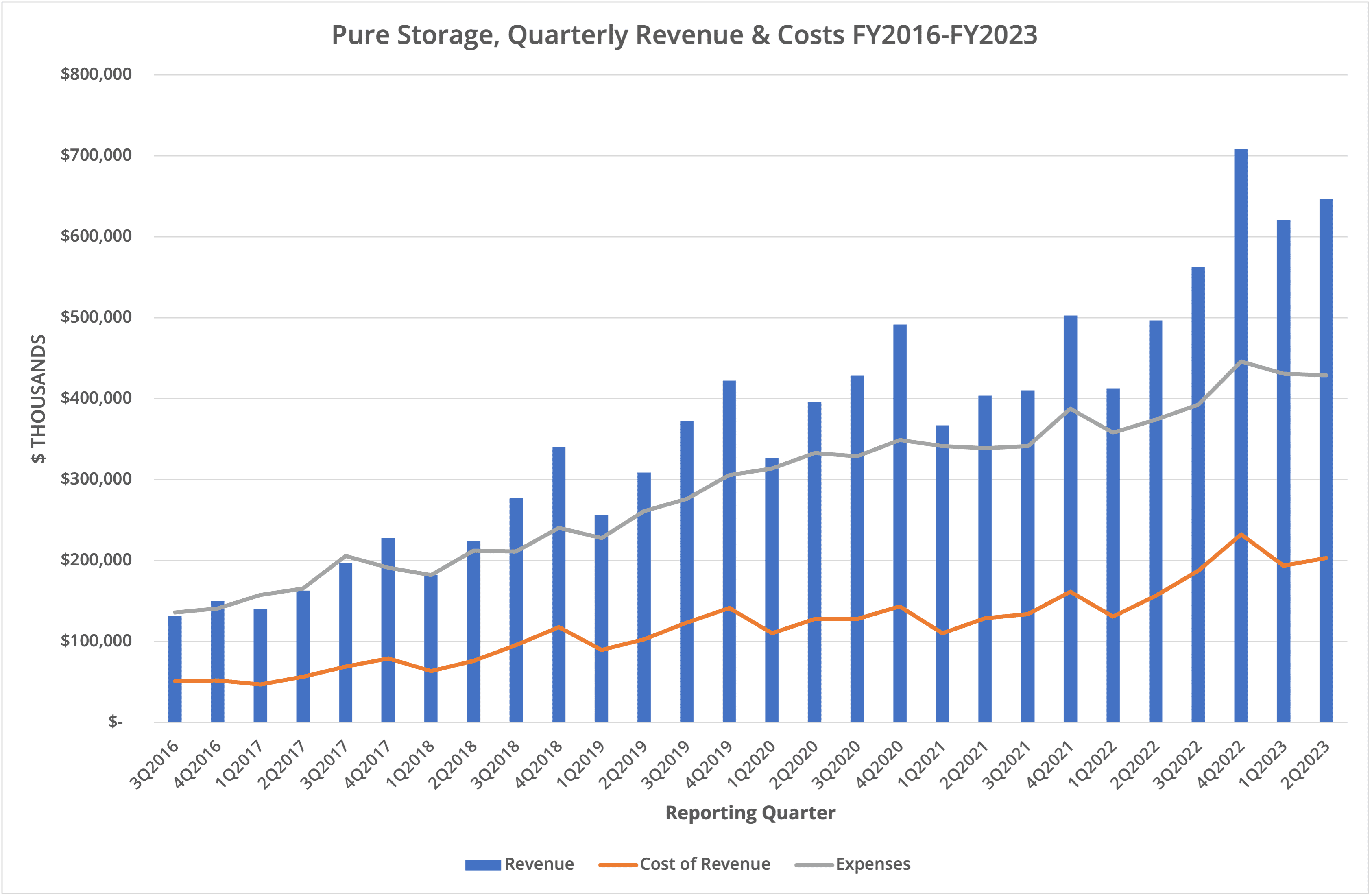
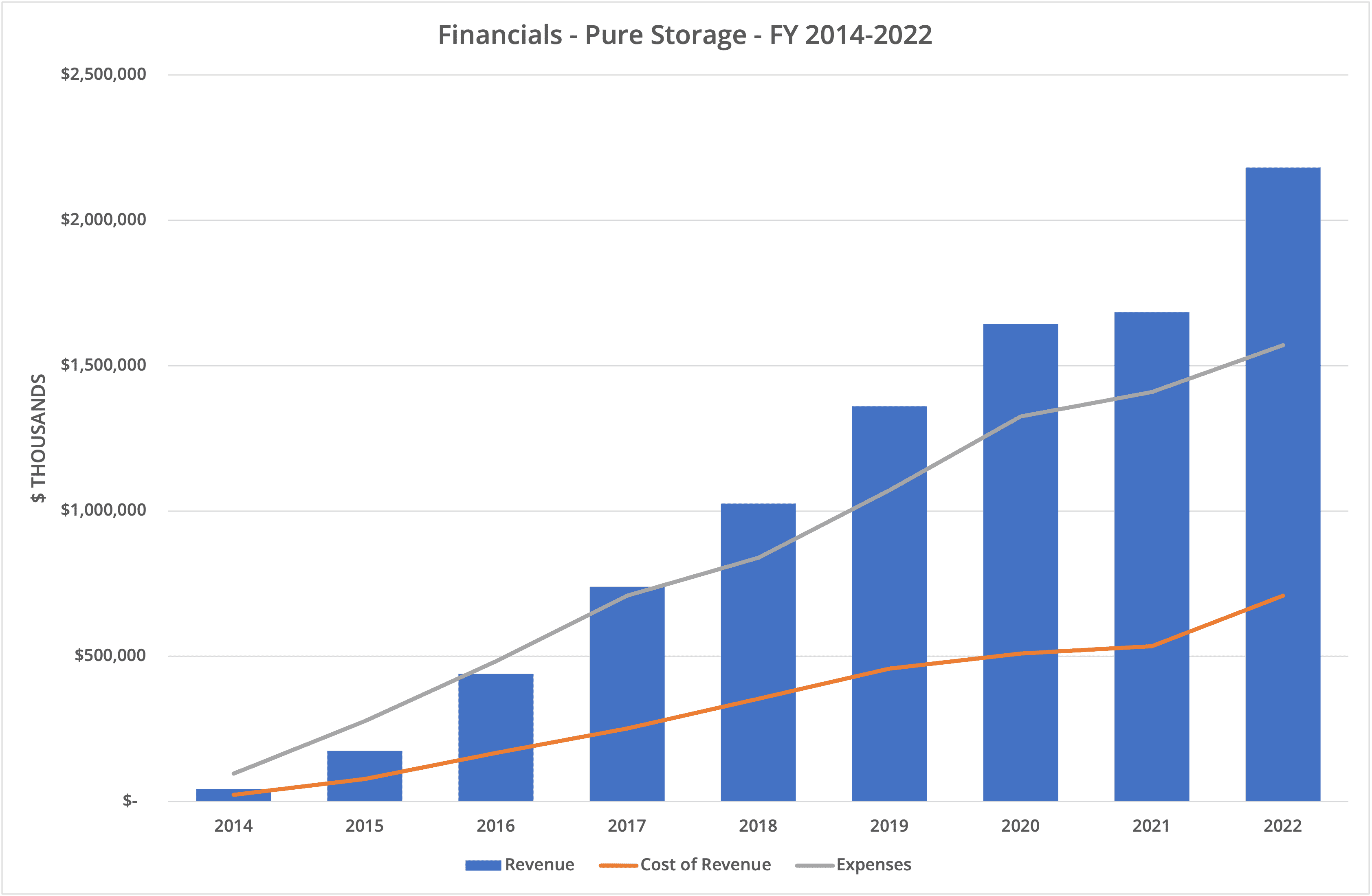
We’ve added the 2Q financials to our data as shown in figure 2. Q4 FY2022 was somewhat of an outlier, however the trend for growth is upwards, with the new increased forecast significantly above the FY2022 figures (see figure 3).
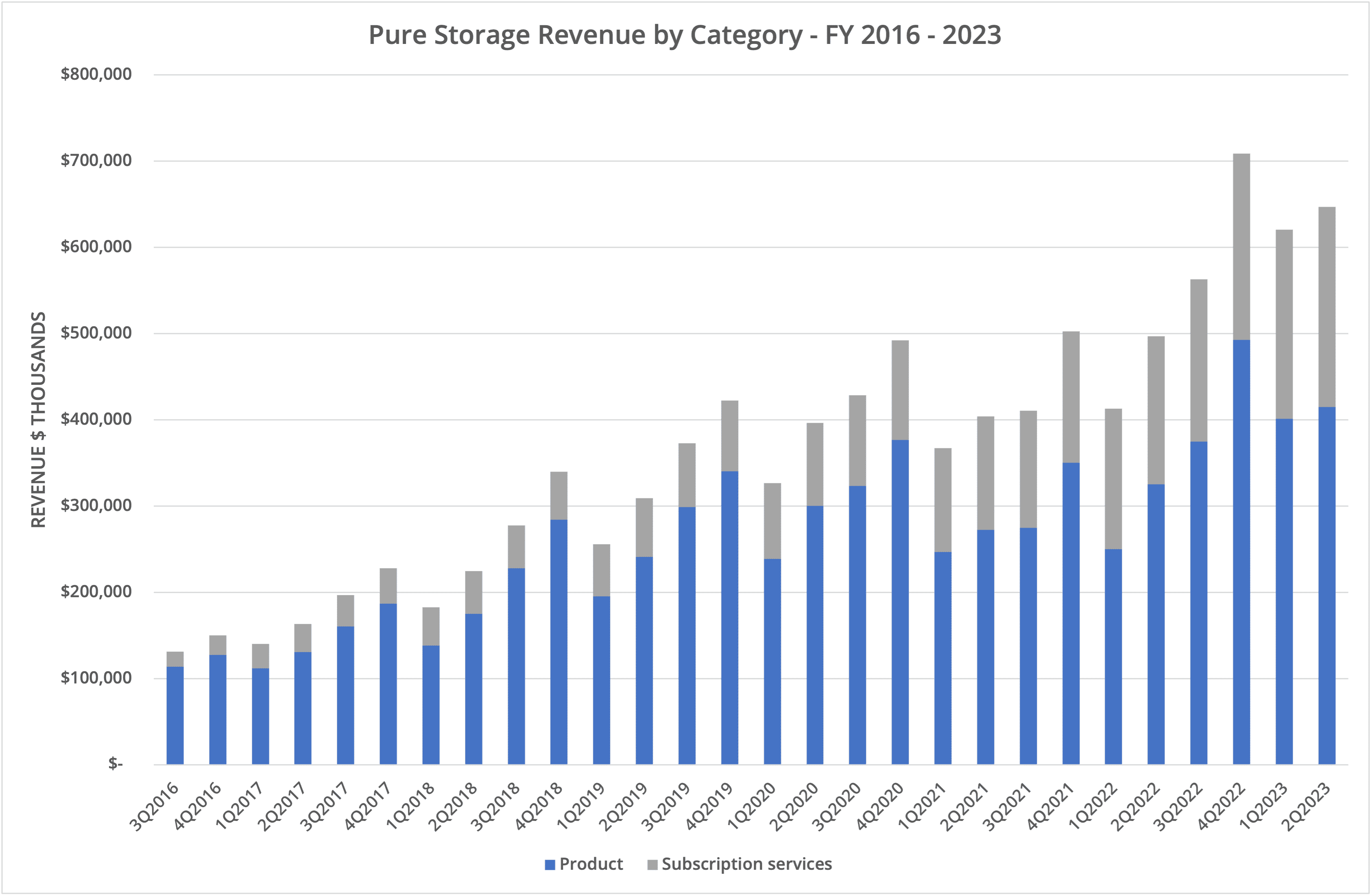
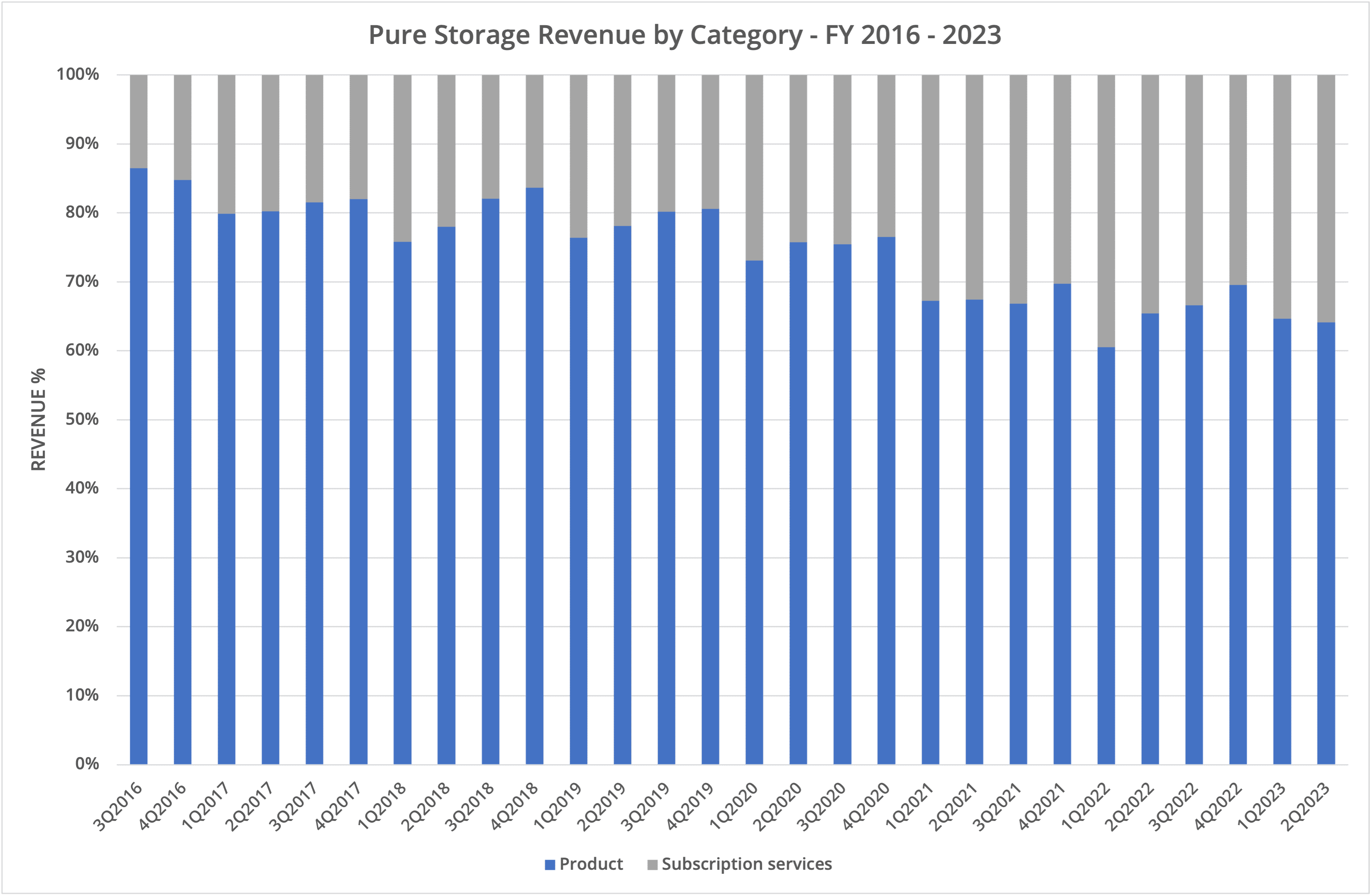
While the revenue data speaks for itself, it’s worth looking briefly at subscription versus product sales, as shown in figures 4 & 5. We’ve graphed the data in absolute terms then shown the totals as percentages, to highlight how much revenue comes from subscriptions. Again Q4 FY2022 is an outlier in the trend, but in general, there is a slow progression to increased revenue from subscriptions.
Design & Architecture
What is Pure Storage doing differently to the rest of the market? As we’ve consistently said, architecture matters. The latest update to FlashBlade//S for example, enables customers to mix and match hardware (DirectFlash module) components. Storage capacity is now just a resource that can be deployed across multiple product lines, or within product families, for that matter.
This capability has benefits for Pure Storage as a supplier (standardisation, ability to mix/match, interchange, reuse), but also for the customer.
Consumption Models
Flexibility in the financial purchasing model is also required to deliver the technical flexibility. Customers can use Evergreen to move capacity between systems within the same family or now across families, without penalties.
Think of how this compares to the public cloud, where storage can be grown or scaled back across multiple regions and availability zones without a requirement to commit to capacity. An individual customer can simply pay for usage because the resources are shared across many customer accounts. Economies of scale kick in.
On premises, this equivalence is hard to achieve efficiently, unless the hardware can be easily repurposed. No other vendor is delivering what Pure Storage offers today, that is, the ability to dynamically rebalance hardware resources to efficiently deliver storage as a service across a range of consumption models and product solutions.
The Architect’s View®
We recommend checking our our dedicated Pure Storage Microsite, which has content, blogs and podcasts that go deeper into explaining the hardware architecture of Pure’s products and why they meet the needs of modern businesses. We believe Pure Storage has the best architectural and business models to deliver as-a-service storage for on-premises customers, which in turn, continue to deliver increased revenue and growth for the company.
Copyright (c) 2007-2022 – Post #c806 – Brookend Ltd, first published on https://www.architecting.it/blog, do not reproduce without permission. Pure Storage is a Tracked Vendor by Architecting IT in storage systems and software-defined storage. Pure Storage has been a customer of Brookend Limited prior to 2022.